
Hunt.in - Just Another Search Engine!


  Home> Indian Harvest Festivals
Send
E-Cards
- Powered By
Indiagreetings.in
Alphabetical list
Month wise List
Religion-wise List
Hindi Calendar - 2009
Hindi Calendar - 2010
List Of Holidays- 2010
Statewise List
Festivals Calendar
Articles
Submit Article
Important Days
Melas / Fairs of India
Festival News
Discussion Forum
Coming Soon
Photographs
More Festivals Being Added Soon

Harvest Festival

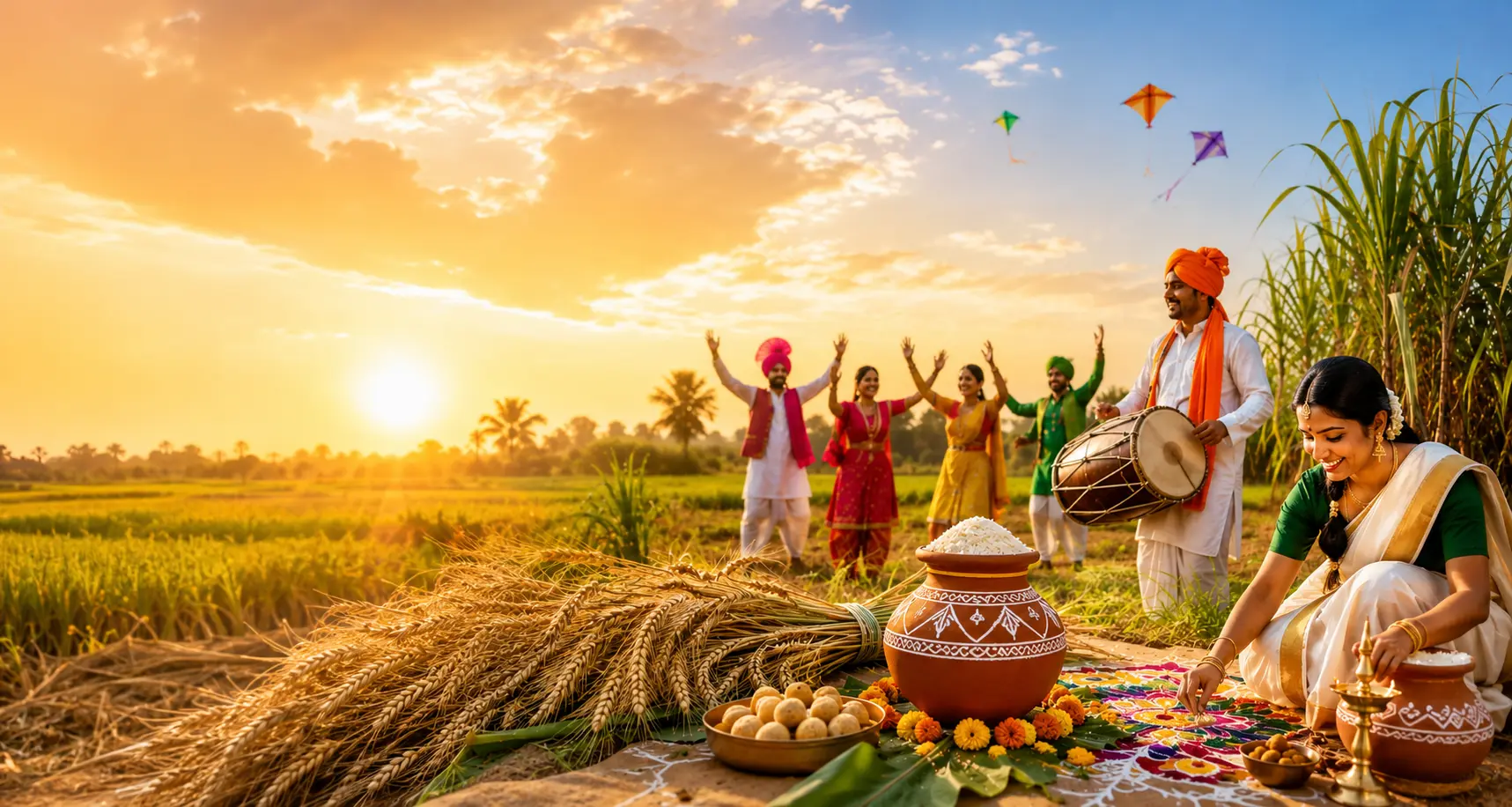
Indian Harvest Festival

Northern Indian Harvest Festival

In Northern India people harvest their wheat in spring, which is either in late February or early March. This is also the time for Holi, which is a Hindu harvest festival and lasts five days.

At festival time everyone dresses up, or buys new clothes. People join in the fun of the festival by wearing old clothes as part of the celebration they throw colored water and red powder at each other. Everyone whether they are family, friends or strangers get the same treatment.

Harvest Festival

There are all kinds of games played and everyone is encouraged to join in. Most of the games are rough and boisterous. Candy Game and also Tug of War.

They also build and light bonfires where everyone in the neighborhood is to provide fuel for the bonfire. After the flames have died down the ashes are rubbed over people's foreheads. This is done, as it was believed to bring good luck for the year ahead.

In Northern India, the festival is known as Lohri while in Assam it is called Bhogali Bihu, in Uttar Pradesh and Bihar it is known as Sankranti, and in Andhra Pradesh it is celebrated as Bhogi, when each household puts on display its collection of dolls.

Eastern Indian Harvest Festival

In Eastern India the primary crop harvested is rice. Here Holi is held at the time of the full moon and is a religious festival more so then that held in the North. Springtime is also the season of love.

Harvest Festival

At this time they celebrate the love story of the God, Krishna and Radha the young woman with whom he fell in love. There are processions through the streets where images of the two are pulled by decorated animals and surrounded by flowers. These images are often shown sitting on a swing made of flowers.

The temples are a place of offering flowers before the images. The love story of Krishna and Radha is dramatized or recalled by reading verses from a very long poem known as the Bhagavata Purana, which means "Ancient Stories of the Lord".

They also have bonfires like they do elsewhere. They hold a dance too where the men and women dance in separate groups around the bonfires. People also throw red and blue powder at each other as well as water.

Southern Indian Harvest Festival


In Southern India they have a festival called Onam. For this festival they clean their homes and the children go out to pick flowers and in return are bought new clothes. People go to the temple and give thanks for the harvest.

Onam has a story behind it that a long time ago an Asura king named Mahabali ruled Kerala. He was dearly loved by his subjects and was known to be a just and wise ruler. His

Harvest Festival

popularity soon spread far and wide. Mahabali, however, incurred the wrath of the gods when, besides earth, he extended his rule to the heavens and the nether world. Indra, the king of gods, did not appreciate the growing power of the asura king. The gods approached Lord Vishnu the preserver in the Hindu trinity to help them out of the situation and to curb the growing power of the Asura king. Lord Vishnu in the guise of Vamana approached Mahabali for alms. Now Mahabali was a very generous man. He told Vamana to ask for anything. The Vamana asked for three pieces of land and the king agreed to it.

Immediately the Vamana increased in size, he grew as big as the universe. With his first step he covered the earth. With the second step he covered the heaven and the nether world. He did not have any land to place the third step. Mahabali offered his head as the third step. The Vamana placed the third step on Mahabali’s head and sent him to nether world. But before placing the final step, Mahabali was granted a boon. Mahabali was allowed to return to his country once a year and visit his people. Onam is the day when Mahabali comes to visit his people. In memory of the happy days of Mahabali’s rule, a grateful Kerala celebrates his annual homecoming with all the pomp and grandeur it can command.

Ten days of feasting, boat races, songs and dance are part of the festivals. Pookalam or floral decorations are at the entrance of each house marks each day. Earthen mounds look like square pyramids; representing Mahabali and Vishnu are also placed in the dung-plastered courtyards. After traditional prayers and worship, the head of the household presents new clothes to the family and friends. This is followed by a lavish feast.

In Southern India Pongal is a four-day harvest festival and one of the most joyful events. In Tamil Nadu, newly harvested rice is ceremonially cooked. In Karnataka, the festival is called 'Sankranti', and cows and bullocks are gaily decorated and fed on Pongal, which is a sweet preparation of rice. In the evening, the cattle are led out in procession to the beat of drums and music.

All the four days of Pongal have their own significance as separate deities are worshipped each day.

On the first day, Bhogi or the Rain God is worshipped. The day begins with an oil bath and in the evening there is a bonfire in which all the rubbish in the house is burnt.

The second day is that of the Surya Pongal. The place where the Pongal puja is to be done, usually the courtyard or open terrace, is washed a day prior to the festival, smeared with cow-dung, and left to dry. Pretty kolams are drawn, which are special to the occasion. At the place where the puja is to be performed, a delicious concoction of rice, moong dal, jaggery and milk is cooked in a new earthenware pot on an open fire. But before that, some fresh ginger is tied around the pot. As the Pongal boils over and spills out of the pot, children waiting for this go around the pot, clapping their hands and crying “Pongalo Pongal”. Once the Pongal is ready, it is tempered with cashew nuts and raisins fried in ghee.

The Pongal is offered, on a new banana leaf along with other traditional delicacies like Vadas, and payasam, to the Sun God in gratitude for bestowing his blessings on the land and the harvest. Sugar cane, grain, sweet potatoes etc. are also offered.

The third day is that of the cattle worship or Mattu Pongal. On this day, the cattle are caparisoned and paraded in the village after they have been offered the Pongal.

The fourth and final day marks the Kanya Pongal, when birds are worshipped. Major attractions of this day are bull and bird fights.

The Sankranti Rath or the chariot is a typical Pongal kolam. Earlier, the ropes of the rath were kept open till the day after Pongal, when all were “joined” from house to house symbolizing a collective desire to realize an uninterrupted cosmic cycle.
This festival is celebrated all over India on the same day, but has different names in each region. However, being a harvest festival, bonfires and feasts are the main thing common to all the celebrations of this festival.

For the People of Coorg in the town of Karnataka in the South of India Puthari or Huthari is the traditional harvest festival known for a variety of folk songs and dances being displayed.

It is observed in November/December. Each village presents its own set of discipline and dances during the annual fairs at its temple, which is the main centre of cultural activities. When the Paddy Crop is ready for the harvest, a little crop is cut, bound in small bunches and handed out to all those present to be taken home and preserved as a sign of prosperity.

The traditional harvest festival of farmers in Kakkoor south of Kochi in South India has its own unique style and Dravidian culture. This is Kakkoor Kalavayal celebrated since the immemorial days.

Kalavayal, which means cattle market, is strongly tied up with the mythical concept of Goddess Sisters of Edapara and Ambassery temples that meet once in every year. Kalavayal has been conducted to commemorate this auspicious day, it is believed.

The four-day celebrations of Kalavayal start on the day of asterism, Aswathy, in the lunar month of Kumbam. The exciting event of this festival is Maramady conducted in the concluding day. This shows the physical strength and skills of peasants and their fighters. The sight of the paired oxen racing in the mud followed by a "flogger" and "runner" is enough to drive the spectators in to a fever of excitement.


Dussehra - Celebrating Lord Ram's triumph over the Evil..
Hunt.in - Just Another Search Engine!
Pan India Network
 
North Zone
 
South Zone
 
East Zone
 
West Zone
 
North East Zone
 
Central Zone
 
Partner Channels