
Hariyali Teej
Hariyali Teej is celebrated by the Hindus as one of the most sacred day in worship of Lord Shiva and […]
Hariyali Teej is celebrated by the Hindus as one of the most sacred day in worship of Lord Shiva and Goddess Parvati
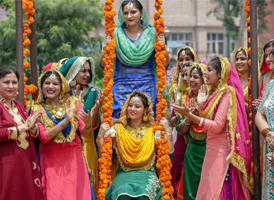
Hariyali Teej, also known as Shravan Teej, is a vibrant festival that celebrates the arrival of the monsoon, the rebirth of nature, and the eternal union of Lord Shiva and Goddess Parvati. Falling on the third day (Tritiya) of the bright fortnight of the Shravan month, the festival is a sensory celebration characterized by swings (Jhoolas), traditional songs, and the symbolic color green.
A Unique Double Celebration
In 2026, Hariyali Teej coincides with India’s 80th Independence Day. This rare alignment means that Saturday, August 15, will be a day of both national pride and deep-seated spiritual tradition.
-
Hariyali Teej Date: Saturday, August 15, 2026
-
Tritiya Tithi Begins: 10:14 AM on August 14, 2026
-
Tritiya Tithi Ends: 12:42 PM on August 15, 2026
-
Best Time for Puja: The morning hours of August 15 (before 12:42 PM) are the most auspicious for performing the Teej rituals and listening to the Vrat Katha.
The Divine Legend: The Penance of Parvati
The spiritual foundation of Hariyali Teej lies in the devotion of Goddess Parvati. It is believed that Parvati performed intense penance over 108 births to manifest Lord Shiva as her husband. On this specific Tritiya of the Shravan month, Shiva finally accepted her devotion.
For married women, the festival is a prayer for a marital bond as resilient as that of Shiva and Shakti. For unmarried women, it is a day to seek blessings for a virtuous life partner.
Essential Rituals and Traditions
Hariyali Teej is defined by several beautiful customs that have been passed down through generations:
-
The Tradition of Sindhara: On the eve of the festival, married women receive “Sindhara”—a gift hamper from their parents containing henna, green bangles, a Leheriya saree, and sweets like Ghewar. This tradition reinforces the link between a woman and her maternal home.
-
The Shringar (Adornment): Women dress in green attire and apply intricate Mehendi designs. The color green symbolizes the thriving harvest and fertility brought by the rains.
-
The Swing (Jhoola): Traditionally, swings are hung from the branches of Banyan or Peepal trees. Women sing “Teej Ke Geet” while swinging, celebrating the cooling of the earth after the summer heat.
-
The Fast (Vrat): Many women observe a rigorous fast (often Nirjala, without water) to show their devotion. The fast is usually broken after the evening puja or the following morning.
Puja Vidhi: Step-by-Step Guide
If you are performing the Hariyali Teej Puja in 2026, follow these traditional steps:
-
The Altar: Create a small platform and place clay or sand idols of Lord Shiva, Goddess Parvati, and Lord Ganesha.
-
The Offerings: Offer Bilva leaves, flowers, and seasonal fruits. A silk cloth (preferably green) is offered to the Goddess as part of the ‘Suhag’ items.
-
The Katha: Recite or listen to the Hariyali Teej Vrat Katha. It is believed that the puja is incomplete without hearing the story of Parvati’s persistence.
-
Evening Vigil: Many communities keep a lamp lit throughout the night, engaging in bhajans and folk dances.
The Festive Flavors: Traditional Recipes
No Teej celebration is complete without the specific flavors of the monsoon:
-
Ghewar: The honeycomb-shaped sweet is the most iconic dish of this festival.
-
Malpua with Rabri: Sweet pancakes served with thickened milk.
-
Kheer Puri: A traditional combination of rice pudding and fried bread offered as Naivedyam.
Balancing 2026 Festivities
With both Independence Day and Hariyali Teej falling on August 15, 2026, many households will balance flag-hoisting ceremonies in the early morning with the traditional Teej Puja shortly after. This alignment serves as a beautiful reminder of the harmony between India’s cultural heritage and its national identity.