
The Partition of 1947: A Tale of Two Borders
Partition of India is perhaps the most tragic event in India s struggle for freedom, major riots followed before Pakistan […]
Partition of India is perhaps the most tragic event in India s struggle for freedom, major riots followed before Pakistan and Bangladesh were formed
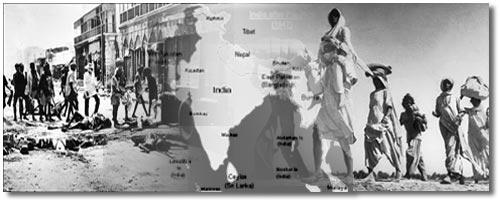
Independence did not come alone. It arrived with a shadow—a line drawn across the map that changed the lives of millions forever. To understand the Partition, we must look at how the “backbone” of a great nation was systematically targeted before the final ink was even dry.
1. The Strategy: Breaking the Backbone
Long before 1947, the seeds of division were sown. In 1835, Lord Macaulay addressed the British Parliament with a cold, calculated observation. He noted that India was a land of such high moral values and wealth that it could never be conquered unless its spiritual and cultural heritage—its very backbone—was broken.
The plan was simple yet devastating: replace ancient Indian education and pride with a belief that “English is superior.” This psychological division eventually paved the way for the physical division of the land.
2. June 1947: The Fateful Decision
By mid-1947, the political landscape had reached a boiling point. The Muslim League and the Congress Party, under the immense pressure of the declining British Empire, agreed to partition the subcontinent along religious lines.
Under the Indian Independence Act, the maps were redrawn. What was once a unified tapestry of cultures was now to be sliced into two separate nations: India and Pakistan.
3. The Great Migration: 15 Million Footsteps
The announcement triggered the largest mass migration in human history.
-
The Movement: Nearly 15 million refugees found themselves on the wrong side of the new borders overnight. Hindus and Sikhs moved eastward and westward into India, while Muslims moved toward the newly formed wings of Pakistan.
-
The Tragedy: These were not just statistics; these were families leaving behind ancestral homes they had occupied for centuries. The migration was marked by unprecedented bloodshed and riots, particularly in the provinces of Punjab and Bengal.
4. Redrawing the Map
When the dust settled, the division looked like this:
-
The Princely States: India received the majority of the 562 scattered princely states, weaving together a massive democratic republic.
-
Two Wings of Pakistan: Pakistan was created in two parts—West Pakistan (modern-day Pakistan) and the Muslim-dominated East Pakistan (which later became Bangladesh in 1971).
Why We Remember in 2026
As we celebrate our 80th Independence Day, we also observe Partition Horrors Remembrance Day (August 14). We tell this story not to relive the pain, but to:
-
Honor the Resilience: To remember the millions of refugees who lost everything and rebuilt their lives from scratch, contributing to the India we see today.
-
Cherish Unity: To remind ourselves that our diversity is our strength, and we must never allow our “backbone” to be broken again.
-
Learn from History: To ensure that the spirit of brotherhood remains the foundation of a modern, developed India.