
Indira Gandhi Jayanti
Indira Gandhi was born on November 19, 1977 and this day came to be celebrated as Indira Gandhi Jayanti, She […]
Indira Gandhi was born on November 19, 1977 and this day came to be celebrated as Indira Gandhi Jayanti, She served as the Prime Minister for 3 terms.
Commemorating the Architect of Modern India
Indira Gandhi Jayanti is observed annually on November 19th to honor the birth of Indira Priyadarshini Gandhi, the first and only female Prime Minister of India. Historically heralded as the “Iron Lady of India,” she was a figure of immense political fortitude whose leadership defined the socio-economic and geopolitical trajectory of the nation for nearly two decades. This day serves as a national reflection on her legacy of self-reliance, empowerment, and unwavering national sovereignty.
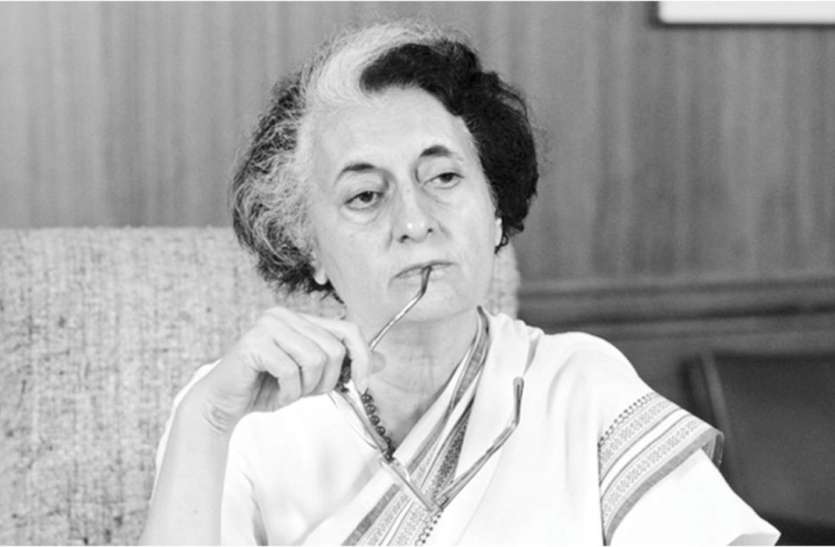
The Formative Years: A Legacy of Revolution
Born in 1917 into the illustrious Nehru-Gandhi family, Indira Gandhi was mentored by the giants of the Indian Independence movement. Her childhood at Anand Bhavan in Allahabad was an immersive masterclass in diplomacy and grassroots activism. From leading the “Vanar Sena” (Monkey Brigade) of children during the freedom struggle to her education at Visva-Bharati University under Rabindranath Tagore and later at Oxford, her journey was a blend of traditional Indian values and global intellectualism.
Defining Pillars of Her Governance
Indira Gandhi’s tenure was characterized by radical reforms that shifted India’s focus from a colonial hangover to a burgeoning regional superpower.
1. Achieving Food Sovereignty: The Green Revolution
Inheriting a nation plagued by famine and dependence on foreign food aid, Indira Gandhi prioritized the Green Revolution. By integrating scientific farming, high-yield seeds, and farmer-centric policies, she transformed India into a self-sufficient, grain-exporting nation. This remains one of the greatest successful economic turnarounds in modern history.
2. Financial Democratization: Nationalization of Banks (1969)
In a move that redefined the Indian economy, she nationalized 14 major commercial banks. This was not merely a fiscal policy but a social mission to ensure that credit reached the rural poor, farmers, and small-scale entrepreneurs, effectively ending the monopoly of the urban elite over national capital.
3. Geopolitical Mastery: The 1971 War and Bangladesh
Her finest diplomatic hour occurred during the 1971 Indo-Pak war. Defying international pressure, she provided sanctuary to millions of refugees and spearheaded a military strategy that led to the creation of Bangladesh. This redefined the map of South Asia and established India as the dominant regional power.
4. Scientific and Environmental Pioneering
Under her watch, India entered the nuclear age with the Smiling Buddha test (1974) and the space age with the launch of Aryabhata. Furthermore, she was a global visionary in environmentalism, establishing the Wildlife Protection Act (1972) long before climate change became a mainstream global concern.
National Observances and Tributes
The commemoration of Indira Gandhi Jayanti is marked by solemnity and a focus on national integration:
-
Shakti Sthal Ceremonies: The President and Prime Minister lead the nation in offering floral tributes at Shakti Sthal, her memorial in Delhi. The name itself, “Place of Strength,” reflects her persona.
-
The Indira Gandhi Prize: On this day, the Indira Gandhi Prize for Peace, Disarmament and Development is often in focus, awarded to individuals or organizations working toward global harmony.
-
Empowerment Seminars: Across the country, seminars are held to discuss women’s participation in politics, inspired by her journey from being called a “Gungi Gudiya” (Silent Doll) to becoming one of the world’s most powerful orators.
Essential Commemoration Guide
| Feature | Details |
| Occurrence | November 19 (Annually) |
| Birth Anniversary | 108th (in 2025); 109th (in 2026) |
| Primary Theme | National Integration and Self-Reliance |
| Core Slogan | “Garibi Hatao” (Eradicate Poverty) |
The Enduring Philosophical Legacy
Indira Gandhi once remarked, “There are two kinds of people: those who do the work and those who take the credit. Try to be in the first group; there is less competition there.”
Her life was an embodiment of the “Karma Yoga” described in the Gita—performing duty despite immense personal and political odds. While her career was not without controversy, her commitment to a secular, united, and technologically advanced India remains undisputed. She proved that leadership is not about the absence of fear, but the mastery of it in the service of the people.
Join the Discussion
Indira Gandhi’s life was a series of high-stakes decisions that still impact our lives today—from the way we bank to the food on our tables.
Which aspect of her leadership do you find most relevant in today’s world? Do you believe her focus on national self-reliance is the blueprint for a modern “Atmanirbhar” India? Share your historical perspectives below.
Pay tribute to Indira Gandhi at tributes.in
इस आर्टिकल को हिंदी में पढ़ने के लिए यहां क्लिक करें