The Day the Walls Cried
History is often written in ink, but at Jallianwala Bagh, it was written in blood. On a day that was supposed to be filled with the laughter of a harvest festival, the air instead filled with the smoke of rifles and the cries of thousands.
Every year on April 13th, India stops to remember this dark chapter—not just to mourn, but to honor the spirit of a nation that refused to be broken.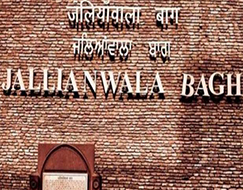
The Story: A Baisakhi That Changed India Forever
It was April 13, 1919. The city of Amritsar was buzzing. It was Baisakhi, a time for celebration, but the atmosphere was tense due to the restrictive British "Rowlatt Act."
Thousands of people—men, women, and children—had gathered in a public garden called Jallianwala Bagh. Some were there to peacefully protest the arrest of national leaders, while many others were simply villagers who had come for the fair, unaware of the ban on public gatherings.
The Narrow Entrance: The Bagh was surrounded by high walls and had only one narrow entrance. At around 5:30 PM, Brigadier-General Reginald Dyer arrived with his troops. Without a single warning to the crowd to disperse, he blocked the only exit and ordered his men to open fire.
Ten Minutes of Terror: For ten continuous minutes, 1,650 rounds were fired into the panicked crowd. People jumped into the garden's deep well to escape the bullets—a spot now known as the "Martyrs' Well." When the smoke cleared, hundreds lay dead and thousands were injured. The ground of the Bagh had turned crimson.
Why and How is This Day Observed?
-
When: It is observed every year on April 13th, marking the anniversary of the 1919 massacre.
-
How: State Tributes: The President and Prime Minister of India pay homage at the flame-shaped memorial in Amritsar.
-
Candle Marches: Across the country, students and citizens hold silent candle-light vigils.
-
The Eternal Flame: In Amritsar, the Amar Jyoti (Eternal Flame) is lit, and people offer flowers to the bullet marks still preserved on the walls.
-
Why This Day is Important
Jallianwala Bagh was the "turning point" of the Indian Freedom Struggle.
-
The Loss of Innocence: It stripped away the illusion that British rule was "just."
-
National Awakening: It turned a moderate movement into a mass revolution.
-
Udham Singh’s Vow: It gave birth to revolutionaries like Shaheed Udham Singh, who waited 21 years to avenge the massacre by assassinating Michael O'Dwyer in London.
What This Day Inspires in Us
This day is a masterclass in Resilience. It teaches us that:
-
Freedom is Not Free: It was bought with the lives of ordinary people who didn't even know they were going to be heroes.
-
Unity is Strength: On that day, Hindus, Sikhs, and Muslims died together; their blood mingled in the soil, creating a blueprint for a secular India.
-
Courage Under Fire: It inspires us to stand up against injustice, even when the odds are stacked against us.
The Youth Connection: Why It Matters to Gen Z
You might wonder, how does a 100-year-old event relate to me?
-
The Fight for Rights: Today’s youth are vocal about digital rights, climate change, and social justice. Jallianwala Bagh is the original symbol of the "Right to Protest."
-
Patriotism vs. Nationalism: It helps the youth understand that true patriotism is about loving your people and standing up for their dignity, rather than just blind following.
-
History as a Shield: In a world of "fake news," visiting Jallianwala Bagh (virtually or in person) connects young people to a tangible, unchangeable truth of their roots.
Interesting Facts & Landmarks
-
The Bullet Marks: You can still see white circles on the walls of the Bagh where British bullets hit.
-
Rabindranath Tagore's Protest: In protest of this brutality, the great poet Rabindranath Tagore renounced his Knighthood (Sir) title.
-
The Well of Death: 120 bodies were recovered from the well alone after the firing ceased.
इस आर्टिकल को हिंदी में पढ़ने के लिए यहां क्लिक करें