
Kabir Festival
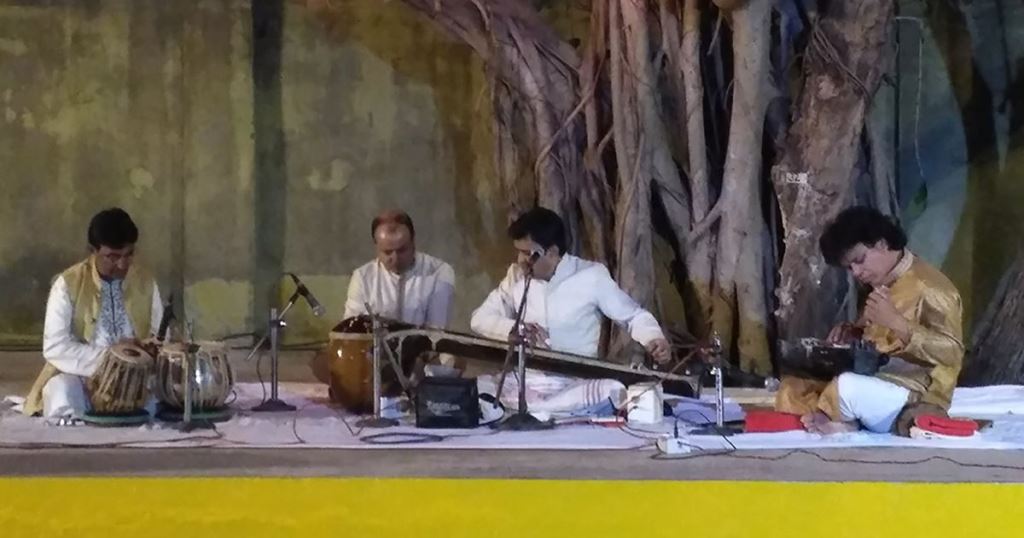
The Mumbai Kabir Festival is an opportunity to get to Kabir through music, songs and poetry. To celebrate the mystic […]
The Mumbai Kabir Festival is an opportunity to get to Kabir through music, songs and poetry.
To celebrate the mystic poet who challenged social norms and united hearts through his “Dohe,” here is a fresh, interactive, and traditional guide to Sant Kabir Jayanti. This version focuses on the profound spiritual heritage of Kabir Das while providing the specific details for the 2026 observance.
The Legend of the Weaver Poet: Who was Sant Kabir?
Sant Kabir Das was a 15th-century mystic poet, saint, and social reformer whose writings influenced the Bhakti movement and Sikhism.
-
The Divine Mystery: According to legend, he was found as a baby on a lotus leaf in the Lahartara Pond in Varanasi by a weaver couple, Niru and Nima.
-
A Bridge Between Worlds: Kabir famously refused to be boxed into one religion. He criticized the hypocrisy in both Hinduism and Islam, teaching that God resides within the heart of every individual, not just in temples or mosques.
Timing and Participants: When and Who?
-
Who: Celebrated by followers of the Kabir Panth, students of literature, and spiritual seekers. It is a gazetted holiday in states like Punjab, Haryana, and Himachal Pradesh.
-
When: It falls on the full moon day (Purnima) of the Hindu month of Jyeshtha.
-
2026 Date: Monday, June 29, 2026.
-
Purnima Tithi Begins: 03:06 AM on June 29.
-
Purnima Tithi Ends: 05:26 AM on June 30.
-
The Soul of the Celebration: Key Rituals
The day is marked by simplicity and deep reflection, mirroring Kabir’s own lifestyle:
-
Shobha Yatra: A grand procession is taken out where devotees sing his “Bijak” and “Sakhi” verses. A portrait of Kabir is often carried through the streets of Varanasi.
-
Kirtan and Satsang: Devotees gather at Ashrams to listen to spiritual discourses. The air is filled with the sound of the Ektara (one-stringed instrument) as folk singers perform Kabir’s poetry.
-
The Ritual of Charity: In line with Kabir’s teachings on serving humanity, mass feedings (Bhandaras) are organized for the poor and the marginalized.
-
Reading the Holy Scriptures: Special recitations of the Kabir Sagar and the Bijak take place, helping the younger generation understand his philosophy of equality.
Interactive Elements: Experience the Wisdom
To truly celebrate Kabir Jayanti, one must engage with his philosophy. Here are a few ways to interact with his legacy:
-
The “Doha” Challenge: Families often hold competitions to see who can recite and explain the deepest meaning of a Kabir Doha.
-
Reflection Corner: Take a moment to ponder his most famous teaching: “Moko Kahan Dhundhere Bande, Mein To Tere Paas Mein” (Where do you search for me, O seeker? I am right beside you).
-
Simplicity Day: Many followers choose to spend the day in complete simplicity—wearing plain clothes and eating minimal food—to honor Kabir’s life as a humble weaver.
Fascinating Facts about Sant Kabir
-
Inclusion in Guru Granth Sahib: Over 500 of Kabir’s verses are included in the Guru Granth Sahib, the holy book of the Sikhs, highlighting his universal appeal.
-
The Miracle of Flowers: Legend says that when Kabir died, his Hindu and Muslim followers argued over his remains. When they lifted the shroud, they found only a heap of flowers, which were then divided equally for cremation and burial.
-
The Language of the People: He wrote in “Sadhukkari,” a blend of several local dialects, so that his message could reach the common man rather than being restricted to the scholarly elite.
How to Reach the Heart of the Festival (Varanasi)
-
By Air: Lal Bahadur Shastri International Airport in Varanasi is well-connected to all major Indian cities.
-
By Train: Varanasi Junction (BSB) is a major rail hub. From the station, the Kabir Chaura Math is a short rickshaw ride away.
-
By Road: Varanasi is accessible via NH2 and NH7. State buses and private taxis are readily available from Lucknow and Allahabad.
Related Topics: Extending the Journey
-
Kabir Chaura Math: Visit the spiritual headquarters of the Kabir Panth to see rare manuscripts and the “Neeru Teela” shrine.
-
The Kabir Festival: Many cities now host “Kabir Festivals” involving contemporary folk-fusion bands that bring his 600-year-old poetry to modern youth.
-
Weaving Tradition: Take a tour of the weaver colonies in Varanasi to see the ancient craft that Kabir himself practiced.
Here are three of his most powerful and famous Dohas, along with their simple meanings:
1. On Speech and Kindness
Doha: Aisi Vani Boliye, Man Ka Apa Khoy | Auran Ko Sheetal Kare, Aaphu Sheetal Hoy ||
Meaning: Speak words that are so humble and sweet that they eliminate the ego of the mind. Such speech should not only provide peace and “coolness” to others but also make you feel tranquil within yourself.
2. On Procrastination and Action
Doha: Kaal Kare So Aaj Kar, Aaj Kare So Ab | Pal Mein Pralaya Hoyegi, Bahuri Karega Kab ||
Meaning: What you have planned for tomorrow, do it today; what you have planned for today, do it right now. If the world ends in a moment (or if time runs out), when will you get the chance to complete your work?
3. On Finding God Within
Doha: Bura Jo Dekhan Main Chala, Bura Na Miliya Koy | Jo Mun Khoja Apna, To Mujhse Bura Na Koy ||
Meaning: I went searching for a “bad” person in the world, but I couldn’t find a single one. However, when I looked deep inside my own heart and mind, I realized that I was the one who needed the most improvement.
इस आर्टिकल को हिंदी में पढ़ने के लिए यहां क्लिक करें
Hi, my self Smriti raj( sufi kathak performer) from Lucknow now based in pune. I wish to be a part of this great festival.For the same i want to know how to apply to present my dance recital based on great sufi sait Kabir in this prestigious festival. Plz provide me contact no or email address to communicate.
Thanks n regard
Smriti Raj.