
The Living Canvas: A Visual Journey Through the Heart of the Kumbh Mela
Kumbh Mela Gallery, Kumbh Mela Gallery, Kumbh Mela Pictures, Kumbh Mela Wallpapers and Images, Mahau Kumbh Pictures To look upon […]
Kumbh Mela Gallery, Kumbh Mela Gallery, Kumbh Mela Pictures, Kumbh Mela Wallpapers and Images, Mahau Kumbh Pictures
To look upon the Kumbh Mela is to witness the soul of India in high-definition. It is a sensory explosion—a place where the ancient and the modern collide in a kaleidoscope of saffron, silver, and the shimmering blue of sacred rivers.
This is not just a gathering; it is a visual testament to the human spirit. Here is the vision of the Mela as it unfolds across the banks.
I. The Saffron Horizon: The Vision of the Akharas
The first image that defines the Kumbh is the sea of saffron. As the sun rises, the Akharas (monastic orders) emerge from their camps.
-
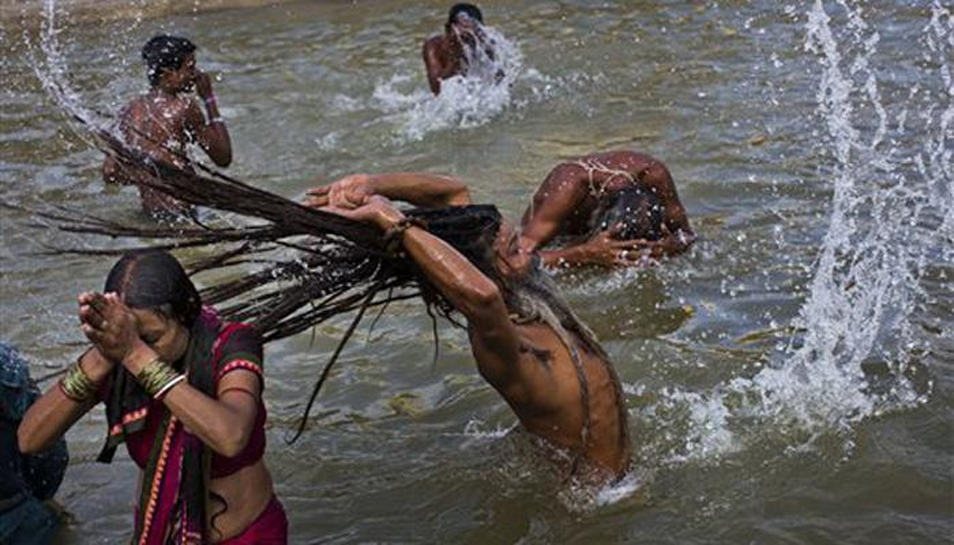
The Naga Procession: Thousands of ash-smeared Naga Sadhus move in a rhythmic wave toward the water. The visual is intense: the glint of sunlight on silver tridents (Trishuls), the heavy swing of matted hair (Jata), and the blowing of conch shells that vibrate through the earth.
-
The Royal Chariots: High above the crowds, senior Mahants sit atop decorated chariots, showering marigold petals on the devotees. It is a scene of medieval grandeur playing out in the 21st century.
II. The Symphony of Light: Cultural Events and Nightly Rituals
When the sun sets, the Mela undergoes a metamorphosis. The chaotic energy of the day settles into a profound, luminous calm.
-
The Deep Daan: Imagine a river that has turned into a mirror of the stars. Thousands of pilgrims release small leaf-boats (Diyas) containing flickering lamps and flowers. From a distance, the river appears to be flowing with liquid fire.
-
The Evening Aarti: On the massive wooden platforms of the ghats, priests perform the Aarti in perfect synchronization. The sight of massive brass lamps being circled against the dark sky, accompanied by the scent of frankincense, creates a visual anchor for the entire festival.
III. The Tent City: A Tapestry of Human Life
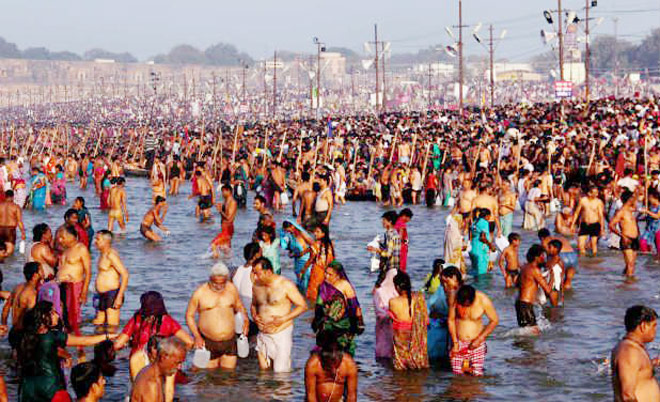
Beyond the riverbanks lies the “City of Tents,” a vast grid of canvas and bamboo that serves as a temporary home for millions.
-
The Kalpvasis’ Quietude: Move through the sectors, and you will see the Kalpvasis—devotees who have left their homes for a month of austerity. You see them huddled around small wood fires, cooking simple meals in earthen pots, their faces etched with a peace that defies the surrounding noise.
-
The Community Kitchens (Langars): Massive vats of steaming Khichdi and tea are served to all, regardless of status. Here, you see the visual representation of “Vasudhaiva Kutumbakam” (The World is One Family).
IV. The Digital and the Divine: How Things Move Around
The modern Kumbh is a marvel of “Invisible Infrastructure.” Despite the ancient rituals, the “vision” of the Mela is supported by high-tech logistics.
-
The Steel Arteries: From above, the chequered steel-plate roads look like silver ribbons cutting through the sand, directing the flow of millions with surgical precision.
-
The Information Hubs: Large LED screens flicker at every major crossing, showing real-time crowd updates, spiritual discourses, and lost-and-found announcements, blending the Vedic era with the Digital age.
-
The Sky-View: Drones and police helicopters hover silently above, their cameras acting as the “Third Eye,” ensuring the safety of the massive congregation below.
V. The Human Experience: Moments in Time
The beauty of the Kumbh is found in the small, candid moments:
-
An elderly woman being helped into the cold water by a stranger.
-
A group of foreign photographers standing in awe as a Sadhu performs yoga on a bed of sand.
-
A child sitting on their father’s shoulders, wide-eyed at the sight of an elephant passing by.