
Nagaur: The Desert Marketplace
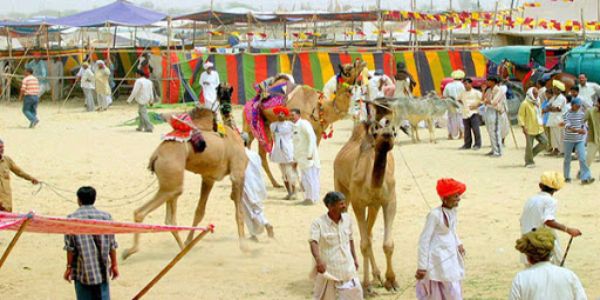
The cattle owners in colourful turban and long moustaches keeps themselves busy in selling and bargaining with the buyers… Beyond […]
The cattle owners in colourful turban and long moustaches keeps themselves busy in selling and bargaining with the buyers…
Beyond the dust and the thunder of hooves, the Nagaur Cattle Fair transforms into one of Rajasthan’s most vibrant commercial hubs. Known officially as the Ramdeoji Pashu Mela, the shopping and celebration aspect of this event is a sensory overload of authentic craftsmanship, fiery spices, and rural ingenuity. It is where the hard-earned profits of the cattle trade are reinvested into the treasures of the Marwar region.
I. Significance: The Economic Soul of the Fair
For the nomadic herders and village artisans, the shopping experience at Nagaur is not a luxury—it is a vital annual exchange.
-
The Mirchi Bazaar: Nagaur is home to Asia’s largest red-chili market. The sight of crimson mountains of sun-dried chilies is the fair’s most iconic visual. Traders from across India arrive here to source the world-famous “Mathania” style spices.
-
Artisanal Heritage: The marketplace serves as a massive open-air gallery for traditional Rajasthani crafts that have remained unchanged for centuries.
II. Experience: A Visual Shopping Journey
The fairgrounds are divided into specialized “mini-markets,” each offering a deep dive into the desert’s material culture.
1. The Iron and Leather Works
Nagaur is famous for its Iron Smithy. Farmers flock here to buy hand-forged agricultural tools, intricate camel shears, and bells. Complementing this is the leather market, featuring:
-
Camel Saddlery: Hand-stitched bridles and saddles adorned with brass studs.
-
Mojaris: The famous pointed-toe Rajasthani footwear, known for its durability and colorful embroidery.
2. The Textile and Jewelry Aisles
The celebration comes alive through the attire of the locals. The shopping stalls offer:
-
Bandhani & Leheriya: Vibrant tie-dye fabrics that reflect the colors of the desert sunset.
-
Ethnic Silver: Heavy tribal jewelry, anklets, and “Hasli” (neck rings) that are staples of Marwari fashion.
3. The General Bazaar
From household utensils to wooden toys and trinkets, this section is a chaotic, joyful space where the “Art of Bargaining” is the local language.
III. Celebration: The Spirit of the Night
As the sun sets over the dunes, the commercial energy shifts into a cultural extravaganza.
-
Folk Theatre: The evenings are dominated by Kuchamani Khyal, a traditional form of operatic folk theatre that tells legends of local heroes and deities.
-
Rhythms of Marwar: The air vibrates with the sounds of the Morchang (jew’s harp), Kartals, and the soulful ballads of the Manganiyar musicians.
-
Rural Sports: The celebration isn’t complete without the Tug-of-War, camel races, and the much-anticipated “Best Breed” competitions, where animals are paraded like royalty.
IV. Logistics: Navigating the Bazaar
-
Location: The main shopping area is situated between the cattle pens and the Nagaur city center, easily accessible on foot or by local rickshaw.
-
Best Time to Shop: Mid-morning (around 10:00 AM) is ideal. The light is perfect for inspecting goods, and the crowds are energetic but manageable.
-
Payments: While the fair is modernizing, cash is still king in the rural bazaar. Ensure you carry smaller denominations for better bargaining power.
V. Professional Snapshot (Evergreen)
| Feature | Detail |
| Market Anchor | Mirchi Bazaar (Red Chili Market) |
| Primary Crafts | Wrought Iron, Camel Leather, Embroidery |
| Entertainment | Kuchamani Khyal & Folk Music |
| Local Specialty | Hand-forged bells and studded Mojaris |
| Traveler Tip | Stay upwind of the chili market to avoid the spice dust! |