
A Tapestry of Devotion: Navratri Celebrations Across India
Dandiya and Garba are the two traditional dances performed during Navratri it is celebrated all over India, especially in Gujarat […]
Dandiya and Garba are the two traditional dances performed during Navratri it is celebrated all over India, especially in Gujarat and Rajasthan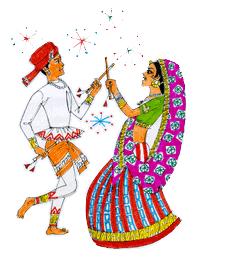
Navratri is a festival that unifies India through the common theme of the Divine Mother’s victory, yet it is celebrated with astonishing regional diversity. From the rhythmic circles of Gujarat to the grand processions of Mysore and the elaborate pandals of Bengal, each state offers a unique lens through which the energy of Shakti is honored.
Western India: The Rhythm of Garba and Dandiya
In Gujarat and Maharashtra, Navratri is synonymous with music and movement.
-
Garba: Dancers move in concentric circles around a “Garbha Deep” (a lamp inside a perforated clay pot), which symbolizes the eternal light of the Goddess residing within the human soul.
-
Dandiya Raas: Performed with decorated wooden sticks, this dance is a symbolic reenactment of the battle between Maa Durga and Mahishasura.
-
Maharashtra’s Focus: While the nine nights are for Durga, Vijayadashami is dedicated to Goddess Saraswati. It is the most auspicious day for Vidyarambham (starting education) and buying assets like homes or gold.
Eastern India: The Grandeur of Durga Puja
In West Bengal, Odisha, and Assam, Navratri takes the form of Durga Puja, a festival that is as much a cultural phenomenon as it is a religious one.
-
The Pandals: Massive, artistically designed temporary structures house exquisite idols of Goddess Durga.
-
The Rituals: The celebrations peak during the last four days (Saptami to Dashami). The sound of the Dhak (traditional drums) and the Dhunuchi Naach (dance with incense burners) create an atmosphere of intense spiritual fervor.
-
The Immersion: On Dashami, the idols are carried in grand processions to rivers for immersion, symbolizing the Goddess’s return to Mount Kailash.
Southern India: The Divine Assembly and Royal Processions
In the South, the celebrations are marked by intricate displays and royal heritage.
-
Tamil Nadu (Golu): Families arrange tiered displays of dolls called Bommai Golu. The first three days focus on Lakshmi (Prosperity), the next three on Saraswati (Knowledge), and the final three on Durga (Power).
-
Karnataka (Mysuru Dasara): The city of Mysore hosts one of India’s most famous celebrations. The Mysore Palace is illuminated with nearly 100,000 light bulbs, and a grand procession (Jumboo Savari) featuring decorated elephants carries the idol of Goddess Chamundeshwari through the streets.
-
Andhra Pradesh: Similar to Tamil Nadu, the Golu tradition is followed, alongside the worship of “Kanyas” (young girls) who are treated as living forms of the Goddess.
Northern India: Fasting, Harvest, and the Ramlila
In the North, the festival is deeply intertwined with the story of the Ramayana.
-
Punjab: Devotees observe a strict seven-day fast. On the eighth day (Ashtami), they perform Kanya Pujan, serving a traditional meal of Puri, Chana, and Halwa to young girls. The festival is also closely linked to the harvest season.
-
Himachal Pradesh: In the Kullu Valley, the celebration begins when the rest of the country finishes. On the day of Dussehra, over 200 village deities are brought to the Dhalpur Maidan in a spectacular mass gathering.
-
Uttar Pradesh and Delhi: The highlight is the Ramlila, a dramatic folk reenactment of the life of Lord Rama, culminating in the burning of giant effigies of Ravana on Dussehra.
2026: A Modern Perspective on Ancient Traditions
As we look toward the celebrations of 2026, Navratri continues to bridge the gap between tradition and modernity. While the core rituals remain unchanged, there is a growing emphasis on:
-
Eco-friendly Idols: Use of clay and natural dyes to protect water bodies during immersion.
-
Inclusive Celebrations: Large-scale community Garbas and community kitchens (Bhandaras) that welcome people from all walks of life.
-
Thematic Pandals: Using the festival as a platform to raise awareness about social and environmental issues.
Community Reflection
India’s diversity is most beautiful when it finds a common center. Whether you are dancing in a circle in Ahmedabad, visiting a pandal in Kolkata, or arranging dolls in Chennai, the spirit of Navratri remains the same.
How is Navratri celebrated in your hometown? Is there a unique local ritual that we haven’t mentioned? Share your stories and traditions with us.
देश भर में कहां कहां कैसे मनाई जाती है नवरात्रि, हिंदी में पढ़ें, क्लिक करें