
Classical Dances of Kerala during Onam
During Onam festival the true color and culture of Kerala comes to life, the classical dances of Kerala like Kathakali […]
During Onam festival the true color and culture of Kerala comes to life, the classical dances of Kerala like Kathakali are performed at events on Onam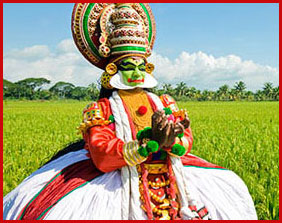
The Moving Traditions: A Guide to Onam’s Iconic Dances
While the Onasadya (feast) satisfies the palate, the traditional dances of Onam provide the “soul” of the festival. These performances are categorized into two distinct spirits: the Lasya (graceful/feminine) and the Tandava (energetic/masculine).
1. Pulikali: The Roar of the Streets
Pulikali (literally “Play of the Tigers”) is the most high-octane folk art of the season.
-
The Transformation: Hundreds of men spend 10 to 12 hours having their bodies painted with oil paints to resemble tigers, leopards, and panthers. The “pot belly” is a prized asset here, as it provides a larger canvas for the tiger’s face to “move” when the dancer shakes.
-
The Act: Dancers mimic a predator being hunted. They pounce, strut, and shake their waists to the thunderous beats of the Chenda and Thakil drums.
-
Where to witness: The grandest display happens at Swaraj Round in Thrissur on the fourth day of Onam.
2. Thiruvathirakali: The Circle of Grace
Also known as Kaikottikali, this is the quintessential dance of Kerala’s women.
-
The Ritual: Performed in a circular formation around a Nilavilakku (brass lamp), women dressed in off-white Kasavu sarees move with lyrical grace.
-
The Harmony: The dancers sing and clap in a rhythmic synchronization. The songs usually praise Lord Shiva and Parvati, symbolizing the “eternal power of love” and the prosperity of the household.
-
Knowledgeable Fact: It is traditionally performed to ensure the longevity of husbands and the health of the family, echoing the “golden age” of Mahabali’s reign.
3. Kathakali: The Silent Epic
Onam is never complete without a Kathakali performance in the temple courtyards.
-
The Mask of Myth: This classical dance-drama is famous for its “Vesham” (elaborate makeup). A green face (Pacha) represents a hero, while red streaks or beards (Katti) represent villainous or aggressive characters.
-
The Language of Eyes: Dancers do not speak. They communicate the nuances of the Ramayana and Mahabharata through Mudras (24 basic hand gestures) and Nava Rasas (nine facial expressions).
-
The Experience: Traditionally, Kathakali starts at dusk and continues until the first rays of the sun, accompanied by the haunting sounds of the Chengila (gong).
4. Kummattikali: The Masked Messengers
Mainly popular in the Malabar and Thrissur regions, this is a playful, “earthy” dance.
-
The Costume: Dancers cover their entire bodies with Kummatti Pullu (a special long grass) and wear brightly painted wooden masks depicting characters like Darika, Kiratha, or Kali.
-
The Performance: They move from house to house, accompanied by the Onavillu (a bow-like string instrument). Children often follow these “grass-men” as they are seen as playful, friendly spirits of the forest.
5. Thumbi Thullal: The Dragonfly Trance
A unique folk dance performed by a group of women, often in the courtyards of homes.
-
The Trance: A lead performer sits in the center of the circle. As the surrounding women sing and clap with increasing speed, the woman in the center enters a rhythmic “trance,” swaying her body to mimic a dragonfly (Thumbi) hovering over a flower.
-
The Vibe: It is intimate, high-spirited, and highlights the sisterhood of the village.
Comparative Summary Table
| Dance Form | Energy | Best For | Must-See Location |
| Pulikali | High | Spectacle & Crowd Energy | Thrissur (Day 4 of Onam) |
| Thiruvathira | Low/Graceful | Tradition & Elegance | Almost every home/cultural center |
| Kathakali | Medium/Deep | Art & Classical Mythology | Kerala Kalamandalam / Temples |
| Kummattikali | Playful | Folk charm & Kids | Rural Palakkad & Thrissur |
| Thumbi Thullal | High | Community bonding | Rural backyards |
Pro-Tips for 2026 Travelers
-
Timing: For Pulikali, reach the Thrissur Swaraj Round by 2:00 PM to get a spot on the sidewalk. The parade usually starts by 4:00 PM.
-
Photography: If you are a photographer, visit the rehearsal camps (called Aniyara) early in the morning. Watching the artists get painted is as fascinating as the dance itself.
-
Dress Code: If you are invited to a home for Thiruvathirakali, wearing a traditional Mundu (men) or Kerala Saree (women) is highly appreciated.
ओणम और केरल के नृत्य के बारे में हिंदी में पढ़ें और हर डांस का वीडियो देखें, क्लिक करें