
Onam Songs
Onam is them most popular festival of Kerala celebrated with zeal by one and all, traditional folk songs and dances […]
Onam is them most popular festival of Kerala celebrated with zeal by one and all, traditional folk songs and dances are performed to celebrate Onam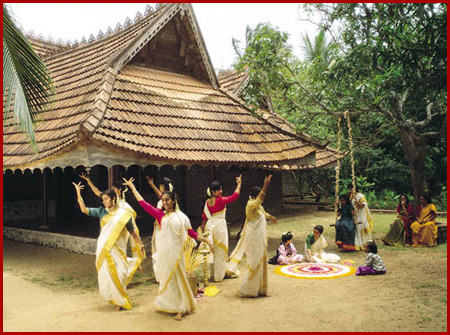
The Rhythm of the Harvest: The Musical Heritage of Onam
In the heart of Kerala, as the golden fields of paddy sway in the breeze and the backwaters mirror the clear blue sky, the air begins to resonate with a specific sound. These are the Onam Songs (Onapattu)—melodies that carry the history, the labor, and the collective joy of a people celebrating their most beloved festival.
Much like the Sadhya satisfies the palate, these songs provide the heartbeat for the festivities, turning every activity—from rowing boats to weaving flower carpets—into a musical performance.
The Soul of the Melody: Why These Songs are Sung
Onam songs are not merely entertainment; they serve three deep-rooted purposes in Kerala’s cultural fabric:
-
Invoking the Golden Age: The primary theme of most Onam songs is the reign of King Mahabali. By singing about his era, people remind themselves of a time when “all humans were equal” and “deceit and theft were unknown.”
-
Rhythm for Labor: Many songs, such as the Vanchipattu (Boat Songs), were originally designed to keep the rowers in sync. The rhythmic chanting ensures that everyone moves as one, turning grueling physical work into a synchronized art form.
-
Community Bonding: Whether it is women dancing the Thiruvathira or men engaged in Onathallu (martial bouts), the songs act as a social glue, bringing the village together in a shared oral tradition.
The Anthem of Onam: “Maveli Nadu Vaneedum Kalam”
If Onam had a national anthem, this would be it. This song depicts the Utopian society under King Mahabali. It is a simple, hauntingly beautiful melody that every Malayali child learns.
The Lyrics (Malayalam Transliteration):
Maveli nadu vaneedum kalam, Manushyarellarum onnu pole Amodathode vasikkum kalam Apathangalkkumilla polippumilla Kallavumilla chathiyumilla Ellolamilla polivachanam…
The Meaning: “When Mahabali ruled the land, all humans were equal. People lived in great joy; there was no danger and no deceit. There were no lies, no cheating, and not even a grain of falsehood in anyone’s words.”
The Verse: Kuchelavritham (The Story of Sudama)
This specific verse describes the humble Kuchela (Sudama) arriving at the golden gates of Lord Krishna’s palace. It captures the contrast between Kuchela’s poverty and the divine opulence of Dwarka.
The Lyrics (Malayalam Transliteration)
Paahi shoure paahi shoure paahi shoure paahi maam Pankaja-lochananaaya padmanabha paahi maam Kuchelanennulla vipran krishnabhakthan nishkinjan Kashmalam theerthu nannay vazvathinnaay mumbinaal…
The Meaning
“Protect me, O Krishna, O Lotus-eyed One, O Padmanabha. There lived a Brahmin named Kuchela, a devoted follower of Krishna, who possessed nothing in this world. To rid himself of his miseries and to live a life of virtue, he set out to meet his lord…”
The Vanchipattu: Songs of the Silver Waters
The Vallam Kali (Snake Boat Race) is perhaps the most iconic visual of Onam. The energy of these races is fueled by the Vanchipattu. These songs use a specific poetic meter that matches the rhythmic dip of the oars into the water.
Why they are sung: The lead singer stands in the middle of the boat, singing a line, which is then repeated in a thunderous chorus by a hundred rowers. The tempo of the song dictates the speed of the boat. As the finish line nears, the song reaches a fever pitch, driving the rowers to their physical limits.
Thiruvathira Pattu: The Grace of the Circle
While the boat songs are masculine and energetic, the Thiruvathira Pattu is graceful and fluid. Women dressed in traditional Kasavu sarees perform a circular dance around a lamp (Nilavilakku).
The Theme: These songs often revolve around the stories of Goddess Parvati and Lord Shiva, or the longing for the return of the King. The movements are slow and rhythmic, synchronized with the clapping of hands, symbolizing the natural cycle of the seasons and the harvest.
Knowledge Check: The Nuances of the Notes
-
The Instrument of the Poor: Historically, Onam songs were often accompanied by the Onavillu, a simple string instrument made from the stem of a palm leaf, or the Kuzhal (a traditional pipe).
-
The Evolution: While traditional folk songs remain the core, modern “Onam Albums” have become a massive industry in Kerala, blending classical ragas with contemporary beats, ensuring the tradition evolves with the youth.
-
The Thumbullu: Small children have their own set of songs specifically for picking flowers for the Pookalam, often singing to the “Thumbi” (dragonfly) to join in their celebrations.
The Pulse of the Race: The Vanchipattu (Boat Songs)
The Vanchipattu is the rhythmic engine of the famous Snake Boat races. Unlike other folk songs, these are designed for utility and physical synchronization.
-
The Meter: The songs follow a specific poetic meter known as Nathonnata. This rhythm perfectly mimics the physical act of rowing—a long pull followed by a brief recovery.
-
The Lyrics: While many songs recount stories from the Hindu epics like the Ramayana or Mahabharata, the most famous is Kuchelavritham Vanchipattu. It tells the story of the meeting between Krishna and his poor friend Sudama (Kuchela).
-
The Impact: The lead singer (the Nilakkar) chants a line, and the hundred-plus rowers roar the response. This collective shouting provides the adrenaline needed to propel the massive wooden boats across the backwaters at incredible speeds.
The Music of the Earth: Traditional Onam Instruments
The melodies of Onam are grounded by unique, handcrafted instruments that reflect Kerala’s rural roots:
-
Onavillu: This is a simple, bow-shaped string instrument made from the pith of the palmyra leaf. It produces a rhythmic, twanging sound that accompanies the Onappattu. Interestingly, “Onavillu” also refers to ceremonial ceremonial bows painted with fine art, dedicated to the deity at the Sree Padmanabhaswamy Temple.
-
Kuzhal and Elathalam: The Kuzhal (a traditional double-reed wind instrument) provides a high-pitched, festive shrill, while the Elathalam (heavy bronze cymbals) provides the metallic clatter that keeps the beat for the dancers.
-
Maddalam and Chenda: These are the heavy-duty percussion instruments. The Chenda provides the thunderous power for the men’s dances and processions, while the Maddalam offers a softer, more rounded bass tone for the graceful Thiruvathira performances.
A Living Tradition
The Onam songs are the “oral archives” of Kerala. They have preserved the values of justice and equality for centuries, long before they were written in textbooks. When a Malayali sings Maveli Nadu Vaneedum Kalam, they are not just singing about the past; they are voicing a hope for a future where humanity returns to that state of simple, honest joy.
ओणम के लोक गीतों का वीडियो देखने और हिंदी में जानकारी के लिये यहां क्लिक करें