
Rituals of Onam
Onam, the most important festival of Kerala is celebrated over a period of 4-10 days with a varied range of […]
Onam, the most important festival of Kerala is celebrated over a period of 4-10 days with a varied range of rituals and customs as well fun and games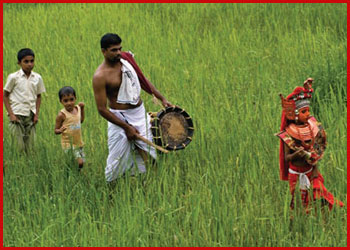
The Sacred Tapestry: Rituals and Traditions of Onam
The ten-day festival of Onam is more than just a date on the calendar; it is a meticulously woven tapestry of ancient rituals, social gatherings, and spiritual observances. While the world sees the colors and the feasts, the true essence of Onam lies in the daily practices that transform a simple harvest into a divine homecoming for King Mahabali.
The Ten-Day Countdown (Atham to Thiruvonam)
Each day of Onam has its own significance, starting from Atham and culminating in the grand finale of Thiruvonam. The rituals evolve in scale and complexity as the days progress.
-
Atham: The arrival of the King is signaled. People take early morning baths and begin the first layer of the Pookalam (flower carpet) using only yellow flowers (Athapoo).
-
Chithira & Chodi: The Pookalam grows in size and color layers. This is the time for Onakkodi—the tradition of buying and gifting new clothes to family members.
-
Moolam: The traditional markets overflow as the preparation for the grand feast begins. In many temples, the Ona-Sadya starts being served on a smaller scale.
-
Uthradom (Onam Eve): Known as the First Onam. This is the busiest day, where tenants and farmers traditionally brought the produce of their land (Onakazhcha) to the landlords or temple authorities.
-
Thiruvonam: The main day. The ritual of Thrikkakara Appan (representing Lord Vishnu and Mahabali) is performed in the courtyard, followed by the grand feast.
The Living Traditions: Beyond the Feast
While the Sadhya and Songs are the highlights, several specific rituals define the cultural identity of the festival:
1. Thrikkakara Appan: The Clay Deity
In the center of the Pookalam, families place pyramid-shaped structures made of clay called Onathappan or Thrikkakara Appan. They represent both the Vamana avatar of Vishnu and the beloved King Mahabali. These are decorated with rice flour paste and flowers, symbolizing that the divine and the righteous ruler are being welcomed into the home.
2. Pookalam: The Floral Welcome
The flower carpet is not just decoration; it is a ritualistic gesture. Traditionally, children would wake up at dawn to gather local wildflowers like Thumba, Mukkutti, and Chethi. Each day, a new circular ring is added to the carpet, representing the growing joy of the community.
3. Onakazhcha: The Gift of the Land
This ancient tradition involves offering the best of the harvest—usually bunches of “Nendran” bananas—to the eldest member of the family or the local deity. It is an act of gratitude to the Earth for providing a bountiful season.
Interactive Knowledge: The “Why” Behind the Rituals
Test your understanding of these ancient Malayali customs:
-
The Thumba Flower: Why is the tiny, white Thumba flower considered the most important for Onam?
-
The Reason: Despite its small size, it is prized for its purity and fragrance. It is said to be the favorite flower of Lord Shiva and Mahabali, proving that in Onam, simplicity is greater than opulence.
-
-
The Swing (Oonjal): Why do you see swings hanging from mango trees during Onam?
-
The Reason: The Oonjal represents the spirit of freedom and high spirits. It is a ritualistic way for the youth to “touch the sky” in celebration of the harvest.
-
-
The Evening Lamp: Why is the Nilavilakku (traditional lamp) lit specifically near the Pookalam?
-
The Reason: Light signifies the removal of darkness and ignorance. Lighting the lamp ensures that the King finds his way to the home even after sunset.
-
The Art of the Games: Onakalikal
Rituals aren’t always solemn; some are high-energy and competitive. These “Onam Games” are essential traditions:
-
Pulikali (Tiger Dance): Men paint themselves as tigers and hunters, dancing to the beat of traditional drums. It is a ritualistic display of bravery and humor that takes over the streets of Thrissur.
-
Thumbi Thullal: A traditional folk dance performed by women. One woman sits in the center (representing a dragonfly) while others dance in a circle, singing songs to induce a “trance-like” rhythmic movement.
-
Vallam Kali: The boat races mentioned earlier are actually a ritualistic offering to the Aranmula Parthasarathy Temple, where the “Thiruvona Thoni” (a boat carrying food for the feast) is escorted by these snake boats.
The Evolution of the Pookalam: A Ten-Day Growth
The floral carpet is a living calendar. Each day, the design must expand, following a traditional progression of colors and complexity.
-
Days 1–3 (Atham to Chodi): The carpet starts small. Only a single ring of yellow flowers is used on the first day. By the third day, multiple rings are added, but the size remains modest to signify the beginning of the welcome.
-
Days 4–7 (Vishakam to Moolam): The design becomes intricate. This is when variety enters; different colored petals like the orange Chethi and purple Vadamalli are introduced to create geometric patterns.
-
Days 8–10 (Pooradam to Thiruvonam): The “Grand Expansion.” On the final day, the Pookalam reaches its maximum diameter. The Thrikkakara Appan (clay pyramids) are placed in the center, and the white Thumba flowers are used to crown the design, signifying peak purity and completion.
The Fabric of the Festival: Kasavu Mundu and Veshti
Onam is the time when Kerala dons its “uniform”—the elegant, off-white handloom attire known as Kasavu.
-
The Aesthetic: The cream-colored fabric represents the simplicity and cleanliness of the Malayali spirit. The golden border (Kasavu) represents the prosperity and sunlight of the harvest season.
-
For Men (Mundu): The Mundu is a long garment wrapped around the waist. During rituals or while eating the Sadhya, men traditionally wear it with a Melmundu (a shawl) or remain bare-chested to show respect to the deity and the King.
-
For Women (Set Mundu/Saree): The Set Mundu is a two-piece garment that predates the modern saree. It is worn with a matching blouse, often paired with traditional gold jewelry and a string of jasmine flowers (Mulla Poo) in the hair.
-
The Ritual Meaning: Wearing new clothes (Onakkodi) is a vital ritual. It symbolizes shedding the old year’s hardships and stepping into the new harvest season with a fresh start and a grateful heart.
The Floral Hierarchy: 10 Flowers for 10 Days
Traditionally, the Pookalam is not just about aesthetics; it is about using specific seasonal blooms. Here is the daily progression of the flowers used to build the layers:
-
Day 1 (Atham): Thumba (Lucas Aspera). These tiny white flowers are the most essential, marking the pure start of the festival.
-
Day 2 (Chithira): Tulasi (Basil) and Mukkutti. Yellow and green shades are added to the white center.
-
Day 3 (Chodi): Chethi (Ixora). Vibrant red blooms begin to give the carpet its first pop of bright color.
-
Day 4 (Vishakam): Sankhupushpam (Butterfly Pea). The introduction of blue/purple tones.
-
Day 5 (Anizham): Jamanthi (Marigold/Chrysanthemum). Yellow and orange petals expand the diameter significantly.
-
Day 6 (Thriketa): Chemparathi (Hibiscus). Large red petals are used to create bold outlines.
-
Day 7 (Moolam): Vadamalli (Globe Amaranth). Deep purple hues are added for contrast.
-
Day 8 (Pooradam): Pichakam (Jasmine). Delicate white jasmine adds a final layer of fragrance.
-
Day 9 & 10 (Uthradom & Thiruvonam): All the above, plus Kolambi (Allamanda) and roses, are used to create the most complex, multi-layered “Grand Design.”
The Etiquette of the Mundu: Tradition in Motion
The Mundu (sarong-like garment) is a versatile piece of clothing, and how it is worn changes depending on the social context and the activity.
-
The Formal Position (Full Length): When entering a temple, greeting elders, or sitting for the Onam Sadhya, the Mundu must be worn at full length, reaching the ankles. This signifies humility and respect.
-
The “Kacha” Style (Tucked Up): During Onakalikal (Onam games) like Onathallu (martial bouts) or tug-of-war, the Mundu is folded in half and tucked at the waist. This allows for free movement of the legs.
-
The Right-Side Fold: Traditionally, the outer fold of the Mundu should fall to the right side. This is considered the standard “auspicious” way to wrap the garment.
-
Double Mundu (Veshti): For the main Thiruvonam day, men often wear a “Double Mundu,” which is thicker and has a wider golden Kasavu border, signaling the peak of the celebration.
A Human Connection
These rituals serve a psychological purpose. In an era where families are often spread across the globe, the act of returning home for Onam to light a lamp or lay a flower carpet acts as a “cultural anchor.” It is a time when the past meets the present, and the legend of a righteous King becomes a lived reality for ten beautiful days.
ओणम की परंपरा और रस्म रिवाज़ हिंदी में समझिये, क्लिक करें