
The Spiritual Science of Fasting: The Paryushan Discipline
Observing fasts on Paryushan Parva is essential to the festival celebrations, Jains believe fasting helps on the path for purification […]
Observing fasts on Paryushan Parva is essential to the festival celebrations, Jains believe fasting helps on the path for purification of the soul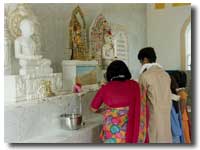
During the 8 days of Svetambara Paryushan and the 10 days of Digambara Das Lakshana, fasting serves as the primary tool for self-purification. It is a spiritual journey designed to reconnect the practitioner with their inner soul by voluntarily withdrawing from sensory pleasures and physical dependencies.
1. The “Why” Behind the Fast: Spiritual & Scientific
-
Karmic Cleansing: The term Tap (penance) literally means “to heat.” Just as heat purifies gold by melting away impurities, fasting is believed to “heat” the soul, burning away the heavy karmic particles attached to it.
-
Ahimsa (Non-Violence): In Jainism, root vegetables (onions, potatoes) and even green vegetables are believed to contain higher concentrations of life forms (Atmas). By abstaining from these, a person minimizes the harm caused to other beings.
-
Biological Detox: Scientifically, these 10 days act as a major reset for the digestive system, purging toxins and resetting the metabolic clock.
2. The Hierarchy of Fasting (Types of Vrats)
Jainism offers various levels of fasting, allowing every individual to participate according to their physical capacity:
-
Upvas: A complete 24-hour fast. In this, one does not consume any food. Usually, only boiled water is consumed between sunrise and sunset.
-
Ekashana: Eating only one meal a day in a single sitting. The rest of the day is spent without food.
-
Beashana: Eating only two meals a day (usually lunch and an early dinner before sunset).
-
Atthai: A rigorous fast where the practitioner consumes only boiled water for 8 consecutive days.
-
Ayambil: A special type of fast where one eats only once a day, consuming simple, bland food (no oil, no ghee, no salt, no sugar, no milk, and no green/root vegetables).
-
Anashan: The total renunciation of food and water for a specified period to achieve ultimate control over the senses.
3. The Ritual Discipline (The Code of Conduct)
To make a fast “Ultimate,” it must be accompanied by these strict rituals:
-
Boiled Water Only: Water must be boiled and consumed only during daylight hours. This is to ensure no microscopic organisms are accidentally harmed or consumed.
-
Chauvihar (Sunset Rule): All food and water intake must stop before sunset. Eating at night is strictly prohibited as it involves higher levels of violence toward invisible microorganisms that thrive in the dark.
-
Pratyakhyan: Before starting a fast, a formal vow (Pachkan) is taken in front of a Guru or a Tirthankara idol. This transforms “not eating” into a “sacred vow.”
-
Parna: The ritual of breaking the fast. After the 8 or 10 days, the fast is broken with very simple, liquid-based food (like moong water) to gradually restart the digestive system.
4. Dietary Restrictions during the Fortnight
If you are not doing a full fast, the “Paryushan Diet” remains mandatory:
-
Strictly No Roots: No onions, garlic, potatoes, or carrots (since they are Anantkai—containing infinite life).
-
No Green Vegetables: Most practitioners avoid all greens to prevent harm to small insects.
-
No Fermented Foods: Items like curd, bread, or idli/dosa batter are avoided as fermentation involves the growth of microorganisms.
-
No Dried Fruits with Seeds: Often, even certain fruits are limited to those with fewer seeds.
5. The “Paryushan Kitchen” Essentials
For those doing Ekashana or Beashana, the diet focuses on:
-
Grains: Wheat, Rice, Bajra, and Jowar.
-
Pulses: Moong Dal, Tur Dal, and Chana Dal.
-
Flours: Besan is a staple for making “Gatta” or “Papad” curries.
-
Spices: Simple spices like Turmeric, Cumin, and Dried Ginger (Saunth) are used, while fresh ginger or chili is avoided.
6. The 2026 Fasting Mindset
As we approach the 2026 dates (Sept 8 – Sept 25), the focus of fasting should be:
-
Mental Fasting: Abstaining from social media, gossip, and anger is considered as important as abstaining from food.
-
Physical Purity: Fasting helps the body align with the somber, meditative energy of the monsoon season (Chaturmas).