
Rani Sati Temple: The Architectural Jewel of Jhunjhunu
The Rani Sati Mandir in Jhunjhunu Rajasthan has a history dating back to over 400 years, famous for its paintings, […]
The Rani Sati Mandir in Jhunjhunu Rajasthan has a history dating back to over 400 years, famous for its paintings, it is a tribute to feminine bravery
A Sanctuary of Marble, Devotion, and Marwari Heritage
The Rani Sati Temple, located in the heart of Jhunjhunu, Rajasthan, is not just a place of worship but a massive complex that stands as a testament to the community spirit of the Marwaris. It is famously known as the largest temple in India dedicated to Rani Sati (Narayani Devi), referred to by devotees as “Dadiji.”
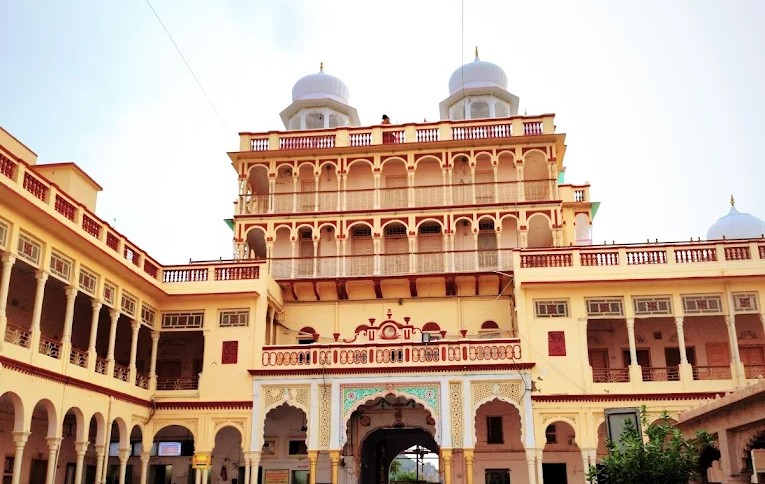
Rani Sati Temple: Visitor Highlights
-
Main Deity: Narayani Devi (The First Sati)
-
Temple Trust: One of the richest and most active social welfare trusts in Rajasthan.
-
Key Event: Bhadra Amavasya (The major annual congregation).
1. Architectural Splendor: The White Marble Marvel
The temple is a masterpiece of Rajasthani architecture, blending traditional motifs with modern grandeur.
-
The Main Sanctum: Unlike most Hindu temples, there is no physical idol of the deity here. The sanctum houses a Trishul (trident), which symbolizes the power and bravery of the Goddess.
-
Intricate Artistry: The temple is constructed almost entirely of white marble. The walls are adorned with colorful glass mosaics, gold-leaf paintings, and murals depicting scenes from the Mahabharata and the life of Narayani Devi.
-
The Spire (Shikhara): A massive gold-plated pot (Kalash) sits atop the main spire, holding a vibrant red flag that can be seen from several kilometers away.
2. The Temple Complex: A City Within a City
The Rani Sati Temple is more than just a single shrine; it is a sprawling complex designed to accommodate thousands of pilgrims.
-
The 13 Minor Temples: Surrounding the main shrine are twelve smaller temples dedicated to other female members of the family who attained “Sati.”
-
Lord Hanuman and Ganesha Temples: The complex also features dedicated shrines for Lord Hanuman, Lord Ganesha, and Lord Shiva, making it a comprehensive pilgrimage site.
-
The Garden and Courtyard: A beautifully landscaped garden offers a peaceful space for devotees to meditate and rest.
3. Facilities and Pilgrimage Experience
The Rani Sati Temple Board is renowned for its hospitality and organization.
-
Accommodation: The complex features massive guest houses (Dharamshalas) with over 300 rooms, equipped with modern amenities to serve the Marwari diaspora visiting from across the globe.
-
Bhojanalaya: A large community kitchen provides clean, traditional Rajasthani meals to hundreds of devotees daily at a nominal cost.
-
The Museum: A small section within the complex displays artifacts and paintings that narrate the genealogy and the historical journey of the Jalan family and Narayani Devi.
4. Cultural Impact: The Mother Figure (Dadiji)
For the Agrawal and Jalan communities, the temple is the spiritual home of their “Kul-Devi” (family deity).
-
Feminine Power: While the act of Sati is no longer practiced or glorified, the temple remains a site where the qualities of Narayani Devi—courage, loyalty, and protection—are celebrated.
-
Festivals: Apart from the main Mela on Bhadra Amavasya, the temple sees grand celebrations during Navratri and Diwali, decorated with thousands of oil lamps.
5. Essential Guide for Visitors
-
Location: Approximately 180 km from Jaipur and 240 km from Delhi.
-
Connectivity: Well-connected by rail (Jhunjhunu Station) and road.
-
Pro Tip: Visit during the evening Sandhya Aarti to witness the temple illuminated and hear the soul-stirring devotional songs.