
Republic Day Chief Guests
List of Chief Guests invited for the Republic Day ceremony and their country, Republic Day Guest of Honor and Special […]
Since 1950, India has followed the distinguished tradition of inviting a Head of State or Government as the Chief Guest for the Republic Day celebrations in New Delhi. This honour is not merely ceremonial. The choice of Chief Guest reflects India’s strategic priorities, diplomatic relations, regional outreach, economic interests, and global geopolitical vision.
Over the decades, this tradition has showcased India’s evolving foreign policy—from early Asian solidarity and Non-Aligned Movement partnerships to strong engagement with Africa, ASEAN, Europe, the Middle East, and major global powers.
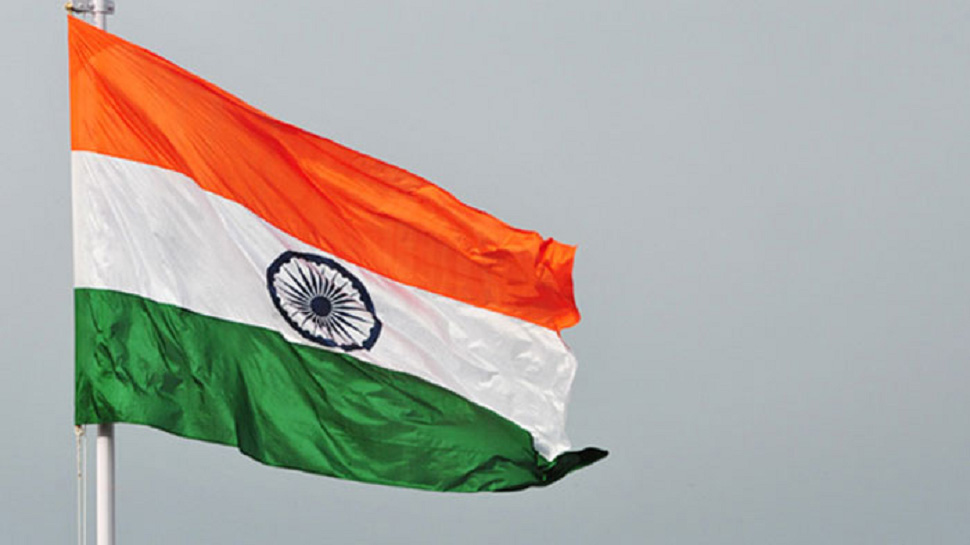
In recent years, India has placed special focus on neighbourhood diplomacy, ASEAN nations, Africa, and strategic partners, highlighting its role as a leading global voice.
Over the decades, the selection of Republic Day Chief Guests clearly mirrors India’s evolving foreign policy priorities. In the early years, India focused on Asian neighbours and Non-Aligned Movement partners such as Indonesia, Yugoslavia, Egypt and Tanzania, reflecting solidarity among newly independent nations. From the 1990s onward, there is a visible Africa focus, with leaders from South Africa, Nigeria, Egypt and Zambia, highlighting India’s growing engagement with the Global South.
The repeated presence of France as Chief Guest (1976, 1980, 1998, 2008, 2016, 2024, 2025) underlines a deep and consistent strategic partnership, especially in defence, space and nuclear cooperation. The ASEAN emphasis—notably in 2012 (Thailand), 2018 (all 10 ASEAN leaders together), and earlier visits from Singapore, Indonesia and Vietnam—reflects India’s “Act East Policy.” The invitations to leaders from the USA, Japan, UAE and Russia show India’s balanced approach in maintaining strong ties with major global powers while preserving strategic autonomy.
Here is the list of Chief Guests invited as the Guest of Honor for the Republic Day ceremony held in Delhi.
1950s–1960s | Asian Solidarity & Non-Alignment
-
1950 – Sukarno (Indonesia)
-
1954 – King Jigme Dorji Wangchuck (Bhutan)
-
1958 – Zhou Enlai (China)
-
1961 – Queen Elizabeth II (UK)
-
1963 – Norodom Sihanouk (Cambodia)
-
1968 – Alexei Kosygin (USSR) & Josip Broz Tito (Yugoslavia)
Theme: Building Asian unity and Non-Aligned Movement partnerships.
1970s–1980s | Africa, Europe & Developing World
-
1971 – Julius Nyerere (Tanzania)
-
1975 – Kenneth Kaunda (Zambia)
-
1976 – Jacques Chirac (France)
-
1979 – Malcolm Fraser (Australia)
-
1983 – Shehu Shagari (Nigeria)
-
1984 – King Jigme Singye Wangchuck (Bhutan)
Theme: Expanding ties with Africa, Europe and Commonwealth nations.
1990s | Post-Cold War Global Engagement
-
1993 – John Major (UK)
-
1994 – Goh Chok Tong (Singapore)
-
1995 – Nelson Mandela (South Africa)
-
1999 – King Birendra (Nepal)
Theme: Repositioning India in a new global order.
2000s | Strategic Partnerships
-
2004 – Lula da Silva (Brazil)
-
2006 – King Abdullah (Saudi Arabia)
-
2007 – Vladimir Putin (Russia)
-
2008 – Nicolas Sarkozy (France)
Theme: Energy security, defence cooperation, emerging economies.
2010s | Act East & Global Powers
-
2012 – Yingluck Shinawatra (Thailand)
-
2014 – Shinzo Abe (Japan)
-
2015 – Barack Obama (USA)
-
2017 – Mohammed bin Zayed (UAE)
-
2018 – All 10 ASEAN Leaders
-
2019 – Cyril Ramaphosa (South Africa)
Theme: ASEAN focus, Indo-Pacific strategy, West Asia engagement.
2020s | Global South & Strategic Balancing
-
2020 – Jair Bolsonaro (Brazil)
-
2021–22 – No Chief Guest (COVID-19)
-
2023 – Abdel Fattah el-Sisi (Egypt)
-
2024 – Emmanuel Macron (France)
-
2025 – Emmanuel Macron (France – repeat visit)
Theme: Global South leadership and strong France partnership.
2026 | To Be Announced
-
Chief Guest 2026 – Awaited
Expected focus: strategic partners, Global South, or regional leadership.
Republic Day Chief Guest Facts
-
First Chief Guest (1950): Indonesia’s President Sukarno was the very first foreign leader to attend India’s Republic Day, reflecting early Asian solidarity after independence.
-
Only British Monarch to Attend: Queen Elizabeth II (1961) remains the only reigning British monarch to be Chief Guest at the Republic Day parade.
-
Historic First US President: Barack Obama (2015) became the first serving U.S. President to attend Republic Day, marking a major milestone in India–US relations.
-
ASEAN Unity Moment: In 2018, leaders of all 10 ASEAN nations were invited together, highlighting India’s “Act East Policy” and deep engagement with Southeast Asia.
-
France – A Special Bond: France has been Chief Guest more times than any other country (1976, 1980, 1998, 2008, 2016), reflecting a strong strategic partnership.
-
When There Was No Chief Guest: 2021 and 2022 had no foreign dignitaries due to the COVID-19 pandemic—an unprecedented pause in tradition.
-
Youngest Leader to Attend: King Jigme Singye Wangchuck of Bhutan attended in 1984 at a very young age, symbolizing India’s close ties with Bhutan.
-
Africa’s Strong Presence: Leaders from South Africa, Egypt, Nigeria, Zambia, Tanzania, and Algeria have been invited, showing India’s long-standing partnership with Africa.
-
Two Leaders, One Year: In 1968, India invited two Chief Guests – Alexei Kosygin (USSR) and Josip Broz Tito (Yugoslavia), an extremely rare diplomatic gesture.
-
Symbol of Strategic Shifts: The choice of Chief Guest often reflects India’s foreign policy priorities, such as outreach to Japan (2014), the Middle East (2017 – UAE), and Latin America (2020 – Brazil).
-
First Woman Prime Minister as Guest: Yingluck Shinawatra of Thailand (2012) was among the notable female leaders to grace the ceremony, reflecting growing gender representation in global leadership.
“Each Chief Guest at India’s Republic Day parade is not just an honoured visitor, but a symbol of India’s diplomatic direction, global priorities and vision for the future.”
इस आर्टिकल को हिंदी में पढ़ने के लिए यहां क्लिक करें