
Tejaji Fair
Tejaji Fair is in September, its held every year at Parbatsar to honor the famous folk deity of Rajasthan, Veer […]
Tejaji Fair is in September, its held every year at Parbatsar to honor the famous folk deity of Rajasthan, Veer Teja who is worshiped widely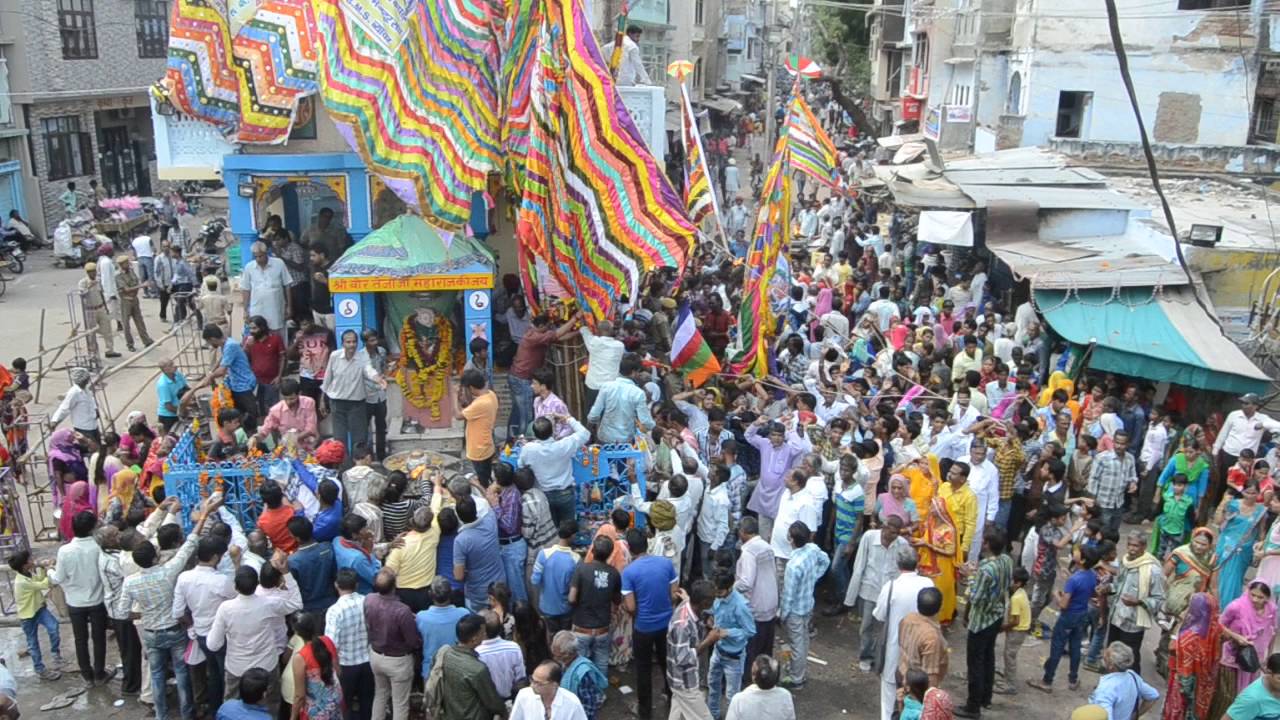
The Tejaji Fair (or Mela Tejaji) is not just a marketplace; it is a thundering collision of Rajasthan’s ancient honor code, massive rural commerce, and spiritual trance. Held in Parbatsar (Nagaur), it is officially the highest revenue-generating animal fair in the state.
The Legend: The Saint of the Tongue
To understand the fair, you must know Veer Tejaji, a 14th-century folk hero who is the personification of the “word of honor.”
-
The Debt of Honor: While traveling to fetch his wife, Tejaji rescued a snake from a fire. When the snake sought to bite him, Tejaji asked for a reprieve to rescue his friend’s cows from dacoits first.
-
The Sacrifice: After a bloody battle, he returned to the snake. His body was so mangled and covered in wounds that there was no clean skin left to bite. To keep his word, Tejaji offered his tongue—the only uninjured part—to the serpent.
-
The Miracle: Impressed by his integrity, the snake blessed him: anyone bitten by a venomous creature who invokes Tejaji’s name or ties a Tanti (sacred saffron thread) will be saved.
The History: A Royal Power Move (1734 AD)
The fair didn’t start by accident. It was a strategic economic masterstroke.
-
Maharaja Ajit Singh: In 1734 AD (Vikram Samvat 1791), the Maharaja of Jodhpur moved the idol of Tejaji from Sursura to Parbatsar.
-
The Goal: By creating a massive religious center, he attracted thousands of traders, effectively creating a “free trade zone” that turned the Nagaur desert into an economic powerhouse for the Marwar Kingdom.
The Spectacle: Dust, Sweat, and Livestock
This is one of Asia’s largest cattle markets, recording up to 130,000 animals in peak years.
1. The “Ferraris” and “Warhorses”
-
Nagauri Bulls: The undisputed stars. They are tall, lean, and known as “trotters.” Unlike heavy farm cows, these bulls are built for speed and endurance in harsh sands.
-
Marwari Horses: Look for the horses with inward-curving ears that meet at the tips. These are the legendary breeds used by Rajput warriors.
2. The Sound of the Alghoza
The fair’s heartbeat is the Teja-re-Byavlo—epic ballads sung by bards. They use the Alghoza (a double-flute played via nose-breathing). The music is hypnotic and often drives devotees into a state of trance.
3. The “Lilan” Mystery
Elders believe that on the night of Teja Dashami, Tejaji himself visits the fair on his horse, Lilan. It is said that at a specific moment in the night, every single animal in the fairgrounds—thousands of them—will suddenly stand up at once in silent respect.
2026 Logistics: The “How-To”
-
Day 1: The White Desert. Drive from Jaipur to Sambhar Salt Lake. Walk the white salt pans at sunset and visit the Shakambhari Mata Temple.
-
Day 2: The Trade. Drive to Parbatsar. Spend the day in the “Golden Dust” of the cattle fair. Witness the silent hand-signal negotiations between traders under cloths.
-
Day 3: The Ritual. On Sept 21 (Teja Dashami), join the massive procession to the Tejaji temple. Tie a Tanti for protection and witness the Alghoza trance performances.
Final Travel Tip
Parbatsar is a “working” fair, not a tourist show. Wear a scarf to protect against the dust, carry cash (digital payments can be spotty in the crowds), and always ask for permission before photographing the tribal traders and their prized horses.
इस आर्टिकल को हिंदी में पढ़ने के लिए यहां क्लिक करें