
Muharram
Muharram, this Muslim festival commemorates the martyrdom of Hazrat Imam Hussein. The month of Muharram marks the beginning of the […]
Muharram, this Muslim festival commemorates the martyrdom of Hazrat Imam Hussein.
The month of Muharram marks the beginning of the Islamic New Year, but it is far more than just a calendar change. It is a period of deep reflection, mourning, and immense bravery. For Muslims around the world, specifically the Shia community, the first ten days of this month are dedicated to remembering the sacrifice of Imam Hussain, the grandson of Prophet Muhammad.
Here is an interactive and reader-friendly guide to understanding the history, rituals, and significance of Muharram.
The Historical Heart: The Battle of Karbala
To understand Muharram, one must look back to 680 AD (61 AH) in the desert of Karbala (modern-day Iraq).
-
The Conflict: Imam Hussain stood against the oppressive rule of the Umayyad Caliph, Yazid. He refused to pledge allegiance to a ruler who he believed was corrupt and unjust.
-
The Siege: Hussain, along with 72 family members and followers (including women and children), was surrounded and denied access to water from the Euphrates River for three days.
-
The Tenth Day (Ashura): On this day, Imam Hussain and his companions were martyred after a valiant stand. Their sacrifice is seen as the ultimate victory of “Right over Wrong” and “Justice over Oppression.”
Timing and Participants: When and Who?
-
When: As the first month of the Islamic Hijri calendar, its dates shift every year by about 10–11 days relative to the Gregorian calendar. The mourning culminates on the 10th day, known as Ashura.
-
Who: While the entire Muslim Ummah respects the month, the Shia community observes intense mourning rituals. Many Sunni Muslims also observe the month by fasting on the 9th and 10th days.
Sacred Rituals: How the Month is Observed
The atmosphere during Muharram is one of solemnity. In many parts of India, like Lucknow, Hyderabad, and Delhi, the following rituals are prominent:
-
Majalis (Congregations): People gather in Imambaras or mosques to listen to “Zikr”—the retelling of the tragedy of Karbala. These sermons are designed to evoke empathy and spiritual reflection.
-
Maatam (Mourning): As a sign of deep grief, devotees perform Maatam (beating of the chest) to rhythmic chants of “Ya Hussain.”
-
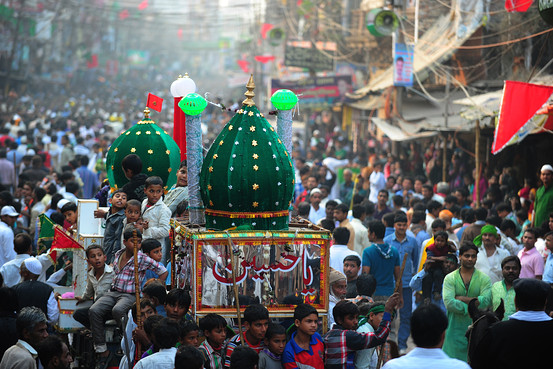
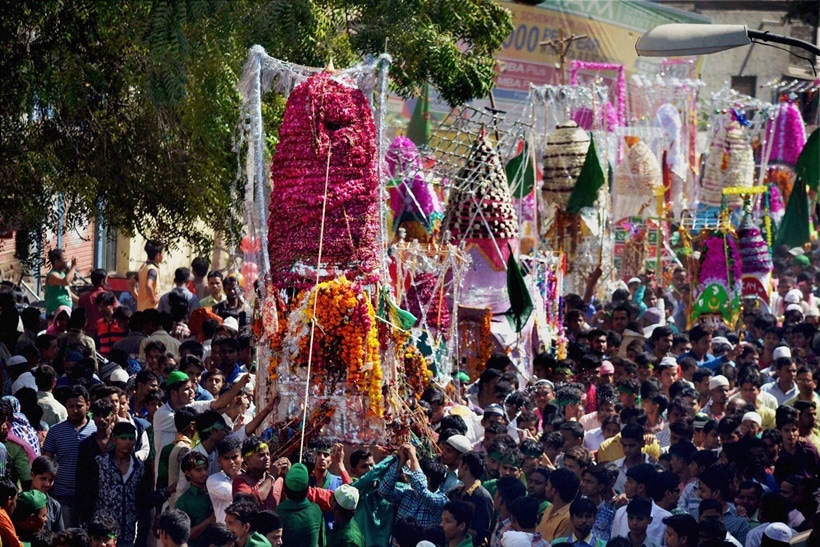
Taziya Processions: In India, beautiful replicas of the tomb of Imam Hussain, called Taziyas, are made of bamboo and colored paper. These are carried in grand processions and later buried at a local “Karbala” ground on the day of Ashura.
-
Alam (The Standard): You will often see black flags or brass standards known as Alams. These represent the flag carried by Abbas, the brother of Hussain, during the battle.
Interactive Elements: Symbols of Devotion
Muharram is as much about the community as it is about the individual. Here are some ways people interact with the tradition:
-
Sabeels (Water Stalls): Because Hussain and his family died thirsty, people set up Sabeels on the streets. They distribute free water, juice, or sweetened milk to everyone, regardless of religion, as a tribute to the martyrs’ thirst.
-
Black Attire: During these ten days, many observers wear only black clothes to symbolize their state of mourning and to forgo any form of celebration or luxury.
-
Niaz (Community Food): Large communal meals are prepared and distributed. Traditional dishes like Haleem (a slow-cooked grain and meat stew) or Khichda are commonly served during this time.
Fascinating Facts & Local Traditions
-
The “Hussaini Brahmins”: Interestingly, in India, there is a community of Hindus known as Hussaini Brahmins who historically supported Imam Hussain in the Battle of Karbala and continue to observe Muharram rituals to this day.
-
The White Horse (Zuljanah): In many processions, a beautifully decorated white horse is led through the streets. This represents Zuljanah, the loyal horse of Imam Hussain that returned to the camp empty-handed after his martyrdom.
-
The Fast of Ashura: For Sunni Muslims, Ashura is also a day of gratitude. It marks the day the Prophet Moses (Musa) was saved from the Pharaoh by the parting of the Red Sea. Many observe a fast on the 9th and 10th of Muharram.
Related Topics: Exploring the Sites
If you wish to experience the depth of Muharram, certain locations are world-renowned:
-
Lucknow, Uttar Pradesh: Known for the Bara Imambara and Chhota Imambara, Lucknow hosts some of the most elaborate and traditional Muharram processions in India.
-
The Shrine of Karbala: Millions of pilgrims travel to Iraq to visit the shrines of Imam Hussain and Hazrat Abbas.
-
Sufi Influence: Many Sufi shrines in India incorporate Muharram into their annual spiritual cycles, emphasizing the “Sufi” path of love and sacrifice.
A Note for Travelers and Visitors
If you are visiting a city during the Ashura procession:
-
Respect the Mood: It is a time of grief; avoid loud music or festive behavior near processions.
-
Photography: Always ask for permission before taking photos of people mourning.
-
Traffic: Expect major road closures in historic city centers as Taziyas can be very large and require high-clearance routes.
मुहर्रम के बारे में हिंदी में पढ़ने के लिये यहां क्लिक करें