
Akshaya Tritiya
Akshaya Trithiya on this day is celebrated with devotion and is considered to be the auspicious day for Hindus The […]
Akshaya Trithiya on this day is celebrated with devotion and is considered to be the auspicious day for Hindus
The Secret of Inexhaustible Wealth
The “Third Day of Unending Success” – Observed on the Shukla Paksha Tritiya of Vaishakha
The word Akshaya (अक्षय) literally translates to “that which never diminishes” or “eternal.” In the Indian consciousness, this day is considered one of the three most auspicious days of the year (Swayam Siddha Muhurta), meaning every moment of the day is spiritually charged and requires no special calculation to begin new ventures.
I. The Mythological Landscape: Why This Day?
Akshaya Tritiya is a “confluence of beginnings.” It marks several pivotal moments in ancient history:
-
The Descent of the Ganges: It is believed that the holy river Ganga descended from the heavens to Earth on this day, bringing purification to the mortal realm.
-
The Birthday of Parashurama: This day marks the birth of the sixth avatar of Lord Vishnu, symbolizing the protection of the righteous.
-
The Draupadi Vastram: When the Pandavas were in exile, Lord Krishna granted Draupadi the Akshaya Patra (a vessel that never ran out of food) on this day. Later, he ensured her dignity remained “eternal” by providing the never-ending sari during the Vastraharan.
-
The Beginning of Treta Yuga: Ancient texts suggest that the second epoch of time commenced on this specific date.
II. The Human Connection: Sudama and the Power of a Handful
The most humanized story of this day is the meeting between Lord Krishna and his impoverished childhood friend, Sudama.
Sudama arrived at Krishna’s palace with nothing but a handful of “Poha” (beaten rice). He was too ashamed to ask for help, but Krishna ate the humble offering with pure love. Upon returning home, Sudama found his hut transformed into a palace.
-
The Lesson: Akshaya Tritiya isn’t about the amount you give, but the purity of the intent. What is given with a clean heart on this day becomes “Akshaya” (limitless).
III. Rituals and Traditional Observances
While modern focus has shifted to commerce, the traditional rituals are deeply spiritual:
-
Jala Daan (The Gift of Water): Since the festival falls at the peak of summer, donating water, umbrellas, and earthen pots (Ghadi) to travelers is considered a supreme act of merit.
-
Pitru Tarpan: It is a significant day to honor ancestors. Providing food and water in the name of one’s forefathers is believed to grant them eternal peace.
-
The First Harvest: In many farming communities, the day marks the beginning of the plowing season. Farmers worship their plows and seeds, praying for an “unending” harvest.
-
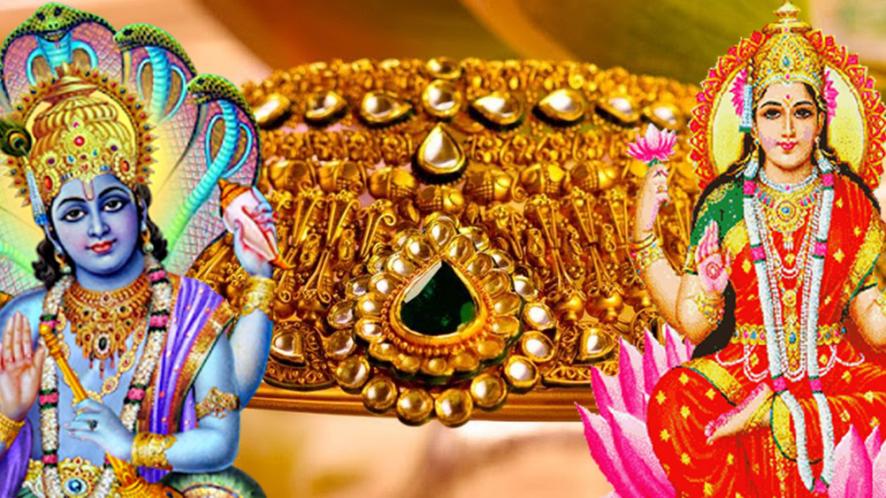
Vandan (Worship): Devotees typically worship Lord Vishnu and Goddess Lakshmi. In many homes, the “Akshaya” spirit is invoked by placing a gold or silver coin in a bowl of rice.
IV. The Symbolism of Gold: Beyond the Metal
In modern India, buying gold has become synonymous with Akshaya Tritiya. However, the traditional reasoning is symbolic:
-
Gold represents the Sun (Surya): It is seen as a physical manifestation of light and energy. Buying even a small gram of gold or a simple silver ornament is a symbolic act of “inviting the sun’s eternal energy” into the household to ward off the “darkness” of poverty and gloom.
V. Essential Knowledge: A Quick Reference
| Dimension | Significance |
| Spiritual | Any prayer, charity (Daan), or ritual performed today yields manifold returns. |
| Economic | The highest volume of jewelry and real estate transactions occurs today. |
| Social | One of the most popular dates for “Mass Weddings” because the entire day is auspicious. |
| Ethical | A reminder to share wealth; “Akshaya” only stays with those who practice “Daan.” |
The Humanized Insight
Akshaya Tritiya is a psychological reset. It teaches us that abundance is a mindset. By giving away a little today—whether it’s a cup of cold water to a stranger or a kind word to a neighbor—we align ourselves with the flow of the universe, proving that the more we circulate goodness, the more “inexhaustible” our inner wealth becomes.
Read More About: Akshaya Tritiya Celebrations
इस आर्टिकल को हिंदी में पढ़ने के लिए यहां क्लिक करें