
The Logistics of Liberation: A Statistical Analysis of the Kumbh Mela
Allahabad Kumbh Facts & Figures, Number of people visiting Maha Kumbh, Celebrities attending Maha Kumbh at Allahabad The Kumbh Mela […]
Allahabad Kumbh Facts & Figures, Number of people visiting Maha Kumbh, Celebrities attending Maha Kumbh at Allahabad
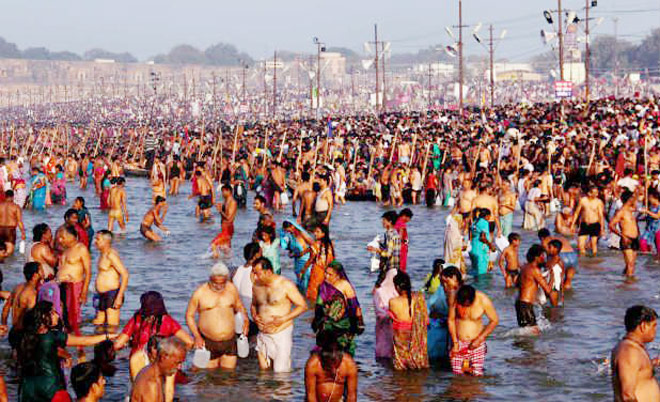
The Kumbh Mela is often cited as the only human event visible from outer space. But beyond the satellite imagery lies a logistical masterpiece—a temporary “Megacity” that emerges, thrives, and dissolves within weeks. To understand the Kumbh is to understand the sheer volume of humanity and the unprecedented infrastructure required to support it.
I. Demographic Magnitude: Quantifying the World’s Largest Human Congregation
The Kumbh Mela represents a global spiritual magnet, with a population density that challenges modern urban theory. It is no longer just a regional pilgrimage but a global phenomenon.
-
Massive Footfall: During a Maha Kumbh, the total attendance often exceeds 100 to 120 million people. To put this in perspective, that is more than the population of most European countries combined.
-
Single-Day Surges: On peak days like Mauni Amavasya, upwards of 30 million pilgrims may take a holy dip within a 24-hour window.
-
Global Diversity: The Mela attracts over 1 million international visitors annually, ranging from spiritual seekers to Hollywood celebrities and global scholars.
II. Strategic Infrastructure: Engineering a Temporary Megacity
The logistics of the Kumbh Mela are a case study for urban planners worldwide. For each cycle, the government constructs a “Pop-up City” with infrastructure that rivals permanent metropolises.
-
Transportation Arteries: Over 150 kilometers of steel-plate roads are laid across the riverbed to manage pedestrian and emergency traffic.
-
Pontoon Engineering: To connect the various sectors across the Ganges, approximately 18 to 22 pontoon bridges are constructed—the largest such assembly in the world.
-
Utilities and Power: The Mela area is supported by over 800 kilometers of electric cabling and hundreds of kilometers of water pipelines, ensuring that even the furthest tent has access to basic utilities.
III. Security Protocols: The Multi-Tiered Safety Architecture
Managing a crowd of 100 million requires a sophisticated blend of traditional policing and cutting-edge technology.
-
Human Intelligence: A dedicated force of over 30,000 police personnel and paramilitary companies are deployed to maintain order.
-
AI-Enabled Surveillance: Modern Melas utilize hundreds of CCTV cameras with real-time analytics to identify potential bottlenecks before they become dangerous.
-
Aerospace Monitoring: Governments now collaborate with organizations like ISRO to use satellite imagery for real-time crowd density mapping and disaster prevention.
IV. The Economic Engine: Socio-Economic Impact of the Pilgrimage
The Mela is a significant driver of the regional and national economy, creating a massive seasonal surge in trade and employment.
-
Job Creation: Each major Mela generates employment for over 600,000 people, from infrastructure workers to local artisans and tour operators.
-
Fiscal Stimulus: The event acts as a massive stimulus for the hospitality and transport sectors, with billions of rupees flowing into the local economy through revenue and taxes.
-
Premium Markets: At the high end, luxury tent cities offer world-class accommodations, catering to a growing international market for “spiritual luxury” tourism.
V. Public Health Governance: Standards in Large-Scale Sanitation
In a gathering of this size, public health is the primary concern. The administrative “Standard of Excellence” ensures the safety of the masses:
-
Integrated Healthcare: A central 100-bed hospital supported by dozens of smaller clinics and hundreds of 24/7 ambulances.
-
Environmental Stewardship: The installation of over 35,000 to 50,000 public toilets to ensure the “Green Kumbh” and “Clean Ganga” initiatives are upheld.
VI. Evergreen Quick-Facts for Readers (Annual Reference)
| Category | Statistical Benchmark (Approx.) |
| Total Visitors | 100 Million+ (Maha Kumbh) |
| Infrastructure | 150+ km of Steel Roads |
| Security | 30,000+ Personnel |
| Digital Tech | AI Crowd Management & Satellite tracking |