
Arattupuzha Pooram
Deep in the heart of Kerala, where the lush greenery meets the rhythmic beat of the Chenda, lies a village […]
Deep in the heart of Kerala, where the lush greenery meets the rhythmic beat of the Chenda, lies a village called Arattupuzha. Here, once a year, the air thickens with the scent of incense and the sound of bells, marking the commencement of the Arattupuzha Pooram—often called the “Mother of all Poorams.”
This is not merely a festival; it is a celestial gathering, a grand “Devamela” (Conclave of Gods) where the heavens are said to descend to earth.
The Legend: The Assembly of 101 Gods
Imagine a time when gods walked among men. Legend says that the Arattupuzha Sree Sastha Temple (dedicated to Lord Ayyappa) is over 3,000 years old. The myth tells of a divine invitation: Lord Ayyappa, the presiding deity, invites all the gods and goddesses from the surrounding 101 villages to his abode.
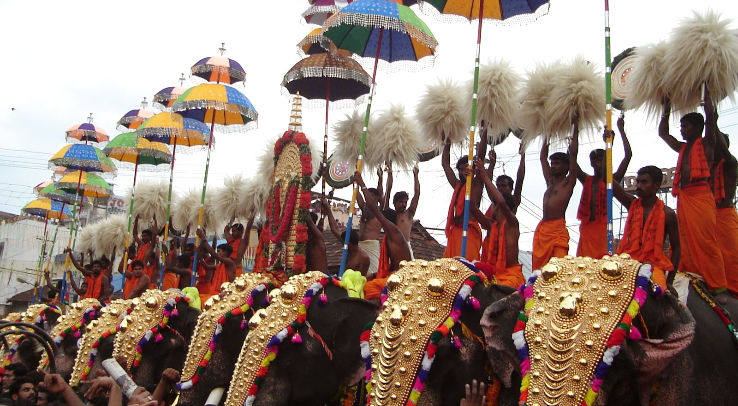
For seven days, the village ceases to be a human settlement and becomes a celestial court. It is believed that even the stars and the moon wait in anticipation to witness this “Devamela.” Historically, the festival used to see 101 deities participating; today, the number is traditionally around 23, but the grandeur remains unparalleled.
When and Where: The Divine Calendar
-
Where: The Sree Sastha Temple at Arattupuzha, Thrissur district, Kerala.
-
When: It is celebrated in the Malayalam month of Meenam (usually March or April). The climax occurs on the day of the Pooram star.
The Rituals: A Seven-Day Symphony
The festival is a meticulously choreographed sequence of rituals that blend devotion with high art.
1. The Arrival (The Conclave): The deities from neighboring temples—including the powerful Thripayar Thevar (Lord Rama) and Oorakathamma Thiruvadi—begin their journey toward Arattupuzha. They arrive on caparisoned elephants, accompanied by the thunderous Pandimelam.
2. The Sasthavinte Melam: The heart of the festival is the percussion. The Panchavadyam (five instruments) and Pandimelam are performed by hundreds of artists. The rhythm starts slow, building into a cresendo that mirrors the heartbeat of the thousands of devotees gathered.
3. The Elephant Pageant: On the penultimate day, the “Elephant Pageant” takes place. Imagine 61 majestic elephants, adorned with Nettipattam (golden headgear), standing in a row under the moonlight. The sight of Muthukkudas (silken umbrellas) being rhythmically exchanged atop the elephants (a ritual called Kudamattom) is a kaleidoscope of colors against the night sky.
4. The Arattu (The Holy Bath): The word “Arattupuzha” literally means “the river of the holy bath.” On the final dawn, the idols are taken to the nearby river. The presiding deity and the guest gods are given a ceremonial immersion. This is the moment of supreme sanctity—the Arattu. It symbolizes the purification of the universe.
History & The Legacy of Sakthan Thampuran
While the temple’s roots are ancient, the “Pooram” format we see today was significantly influenced by the legendary ruler of Kochi, Sakthan Thampuran.
Before his time, the Arattupuzha Pooram was the undisputed king of festivals. However, due to a heavy monsoon one year, some temples could not reach Arattupuzha on time and were denied entry. Insulted, they went to the King. In his wisdom and slightly rebellious spirit, Sakthan Thampuran started the Thrissur Pooram at the Vadakkunnathan Temple to ensure no deity (or devotee) felt left out. Thus, Arattupuzha remains the “Mother,” the elder source from which the modern Pooram culture flowed.
Significance: Why it Matters
-
Social Harmony: The festival breaks all barriers of caste and creed. The entire community—from the mahouts to the weavers of the silk umbrellas—works together.
-
The “Devamela”: Unlike other festivals where one god is celebrated, here, the focus is on the unity of the divine. It is a celestial summit where the protective powers of the land gather to bless the soil.
-
Preservation of Art: It is the largest stage for Kerala’s traditional percussion and elephant culture, keeping ancient crafts and musical traditions alive for over a millennium.
A Story of Devotion
There is a local legend about a humble farmer who had nothing to give but his old, frail elephant to the Lord. While the rich brought tusks of gold, the farmer offered his elephant with a heart full of prayer. It is said the Lord was so pleased that he prioritized the farmer’s elephant in the procession. This story serves as a reminder to every visitor: at Arattupuzha, the Gods do not look at the gold on the elephant, but the gold in the heart of the devotee.
As the sun sets on the final day and the gods return to their respective villages, a silence falls over Arattupuzha. But the echoes of the drums remain, a promise that next year, the heavens will return to this small village once again.