
Guru Nanak Dev Ji: The Founder of Sikhism and Prophet of Peace
Guru Nanak was the first Nanak and the founder of the Sikhism who believed that salvation is achieved under sadguru […]
Guru Nanak was the first Nanak and the founder of the Sikhism who believed that salvation is achieved under sadguru s guidance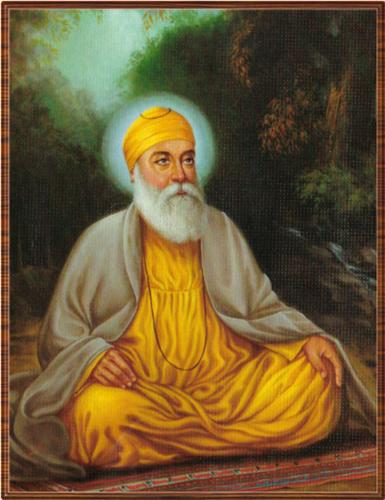
Guru Nanak Dev Ji (1469–1539) was the first of the ten Sikh Gurus and the visionary founder of Sikhism. His message was simple yet revolutionary: “Ek Onkar” (God is One) and the equality of all human beings regardless of caste, creed, or gender. At a time of deep social and religious division, Guru Nanak walked thousands of miles to spread a message of love, selfless service, and honest living.
Quick Reference: Life of the First Guru
| Feature | Details |
| Birth | April 15, 1469 (Nankana Sahib, now in Pakistan) |
| Famous Quote | “Truth is the highest virtue, but higher still is truthful living.” |
| The Three Pillars | Naam Japna, Kirat Karni, Vand Chakko |
| Major Travels | Four major journeys (Udasis) across Asia |
| Successor | Guru Angad Dev Ji |
The Three Pillars of Guru Nanak’s Teachings
To rank for “Guru Nanak’s philosophy,” we must highlight these three actionable concepts:
-
Naam Japna (Meditation): Constant remembrance of God through meditation and prayer.
-
Kirat Karni (Honest Labor): Earning a livelihood through honest, hard work and physical/mental effort.
-
and Chakko (Share & Consume): Sharing one’s wealth and resources with the needy and the community.
The “Udasis”: Guru Nanak’s Global Journeys
Unlike many saints who stayed in one place, Guru Nanak was a global traveler. He undertook four major spiritual journeys called Udasis, traveling as far as Mecca, Tibet, Sri Lanka, and Baghdad.
-
His Goal: To engage in dialogue with kings, priests, and commoners to challenge superstitions and empty rituals.
-
The Message: He famously stated, “There is no Hindu, there is no Muslim,” emphasizing that our common humanity is more important than our religious labels.
The Concept of ‘Langar’ (The Community Kitchen)
One of Guru Nanak’s most enduring legacies is the Langar. He started the tradition of a free communal kitchen where everyone—from emperors to beggars—must sit together on the floor and eat the same food.
-
Interactive Note: Next time you visit a Gurudwara, notice how Langar breaks the “ego” by making everyone equal.
Popular Stories (Sakhis) of Guru Nanak
-
The Sacha Sauda (True Business): As a boy, his father gave him money to start a business. Nanak spent the money feeding a group of hungry saints, calling it the “truest business” possible.
-
The Squeeze of the Bread: In a famous meeting with a corrupt official (Malik Bhago) and a poor carpenter (Bhai Lalo), Nanak showed that bread earned through honest labor (Lalo’s) oozed milk, while bread earned through exploitation (Bhago’s) oozed blood.
Celebrating Gurpurab: The Festival of Lights
The birth anniversary of Guru Nanak, known as Guru Nanak Gurpurab, is one of the most sacred festivals in India.
-
Prabhat Pheris: Early morning processions through neighborhoods singing hymns.
-
Akhand Path: A 48-hour non-stop reading of the Guru Granth Sahib.
-
Gatka: Displays of traditional Sikh martial arts.
Frequently Asked Questions (FAQ)
Q: What is the main scripture of Sikhism?
A: The Guru Granth Sahib Ji, which contains the hymns of Guru Nanak and other saints, is the eternal Guru of the Sikhs.
Q: What does “Ek Onkar” mean?
A: It is the symbol that represents the One Supreme Reality. It is the beginning of the Mul Mantar, the first composition of Guru Nanak.
Q: Why did Guru Nanak wear a mix of Hindu and Muslim clothing?
A: He did this deliberately to show that he did not belong to one specific sect, but to all of humanity.
इस आर्टिकल को हिंदी में पढ़ने के लिए यहां क्लिक करें