
Raja Ram Mohan Roy Jayanti
Raja Ram Mohan Roy Jayanti celebrates the birthday of Raja Ram Mohan Roy, the Pioneer of Modern India Remembering the […]
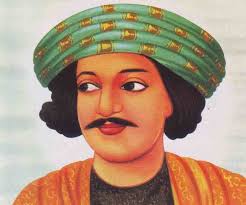
Raja Ram Mohan Roy Jayanti celebrates the birthday of Raja Ram Mohan Roy, the Pioneer of Modern India
Remembering the Mind That Changed Indian Society
Raja Ram Mohan Roy Jayanti is observed every year on 22 May to commemorate the birth anniversary of Raja Ram Mohan Roy, one of India’s most influential social reformers. He is widely regarded as the Father of the Indian Renaissance for his efforts to reform society through reason, education, and compassion.
This day serves as a reminder of how one individual’s courage and ideas helped challenge deep-rooted social evils and laid the foundation for a modern, progressive India.
1. Why Raja Ram Mohan Roy Jayanti Is Observed
-
Celebrated annually on 22 May, the birth date of Raja Ram Mohan Roy (1772).
-
Observed to honour his lifelong struggle against social injustice, superstition, and inequality.
-
The day highlights the importance of reform, rational thinking, and human rights in Indian society.
-
Educational institutions, cultural groups, and social organisations remember his legacy through discussions, lectures, and awareness programs.
2. Early Life and Background
-
Raja Ram Mohan Roy was born in Radhanagar village in Bengal Presidency (present-day West Bengal).
-
He belonged to a well-educated family and received traditional learning in Sanskrit, Persian, and Arabic, along with exposure to Western education.
-
He was a scholar of multiple languages, which helped him study religious texts from different cultures and question rigid interpretations.
-
From an early age, he showed a strong interest in social reform and rational thought.
3. His Vision for Indian Society
Raja Ram Mohan Roy believed that true progress could only happen when society was guided by reason, equality, and moral values.
His vision included:
-
A society free from blind faith and harmful customs.
-
Equal rights and dignity for women.
-
Education that combined Indian knowledge with modern scientific thinking.
-
Religious tolerance and ethical living rather than ritualism.
4. Major Social Reforms Led by Raja Ram Mohan Roy
4.1 Abolition of Sati
-
He strongly opposed the practice of sati, where widows were forced to burn themselves on their husband’s funeral pyre.
-
Through petitions, writings, and public campaigns, he convinced the British administration to act.
-
His efforts played a major role in the official abolition of sati in 1829.
4.2 Support for Women’s Rights
-
Advocated for women’s education, widow remarriage, and inheritance rights.
-
Spoke against child marriage and polygamy.
-
Believed that the progress of society was impossible without the empowerment of women.
4.3 Opposition to Social Inequality
-
Criticised caste discrimination and social exclusion.
-
Encouraged equality and respect for all individuals, regardless of birth or background.
5. Contribution to Religious and Intellectual Reform
-
Founded the Brahmo Samaj in 1828, a reform movement promoting monotheism, ethical living, and social reform.
-
Rejected idol worship and meaningless rituals, focusing instead on moral values and devotion to one universal God.
-
Encouraged people to question traditions that lacked logic or compassion.
-
His ideas helped create a more open and reform-oriented approach to religion in India.
6. Role in Education and Journalism
6.1 Educational Reforms
-
Supported modern education, especially the teaching of science, mathematics, and philosophy.
-
Helped establish institutions like the Anglo-Hindu School, which blended traditional and Western learning.
-
Believed education was the key to social awareness and national progress.
6.2 Journalism and Freedom of Expression
-
Published newspapers such as Sambad Kaumudi and Mirat-ul-Akbar.
-
Used journalism as a tool to spread reformist ideas and challenge injustice.
-
Spoke strongly against press censorship and supported freedom of expression.
7. Why He Is Called the Father of the Indian Renaissance
-
Raja Ram Mohan Roy introduced rational thinking at a time when society was deeply influenced by superstition.
-
His reforms inspired later movements like the Bengal Renaissance, which transformed literature, education, and social thought.
-
He bridged traditional Indian values with modern ideas, helping India move toward a more progressive mindset.
-
His influence extended beyond his lifetime, shaping future reformers and leaders.
8. Relevance of Raja Ram Mohan Roy Today
Even in today’s world, his ideas remain highly relevant:
-
His emphasis on critical thinking encourages people to question misinformation and social prejudice.
-
His fight for gender equality aligns with modern movements for women’s rights.
-
His belief in education reminds us of the role learning plays in social development.
-
His stand against injustice inspires individuals to speak up for what is right.
9. How Raja Ram Mohan Roy Jayanti Is Remembered Today
-
Schools and colleges organise lectures and essay competitions on social reform.
-
Cultural programs and discussions highlight his life and contributions.
-
Social organisations use the day to promote awareness about equality, education, and human rights.
-
The day encourages reflection on how far society has progressed and how much work still remains.
10. Legacy That Continues to Inspire
Raja Ram Mohan Roy was not just a reformer of his time but a thinker far ahead of it. His courage to challenge injustice, his faith in reason, and his commitment to human dignity continue to inspire generations.
On Raja Ram Mohan Roy Jayanti, India remembers a man who showed that meaningful change begins with knowledge, compassion, and the courage to question what is wrong.
इस आर्टिकल को हिंदी में पढ़ने के लिए यहां क्लिक करें