
Nagaur: The Rituals and Rhythm
Nagaur Cattle fair is held for four days in the month of Magha of Hindu calendar, which usually falls in […]
Nagaur Cattle fair is held for four days in the month of Magha of Hindu calendar, which usually falls in January or February and March…
The Nagaur Cattle Fair is a masterpiece of timing, dictated by the ancient Hindu lunar calendar and the cooling winds of the Rajasthani winter. Known locally as the Ramdeoji Pashu Mela, it is an eight-day immersion into the heart of Marwar, where time is measured not by clocks, but by the rising sun and the shifting sands.
I. The Lunar Calendar: When the Desert Wakes
The Nagaur Fair is an annual event that follows the Hindu month of Magh (typically spanning January and February).
-
The Opening Act: The festivities traditionally begin on Magh Shukla Pratipada (the first day of the bright half of the month).
-
The Grand Finale: The fair reaches its crescendo eight days later. Because it follows the lunar cycle, the Gregorian dates shift every year, adding to the mystical, “calculated by the stars” allure that attracts global astronomers and cultural historians.
II. The Eight-Day Narrative: How the Celebration Unfolds
The celebration is a carefully choreographed sequence of trade, sport, and spiritualism.
Days 1-3: The Arrival and The Barter
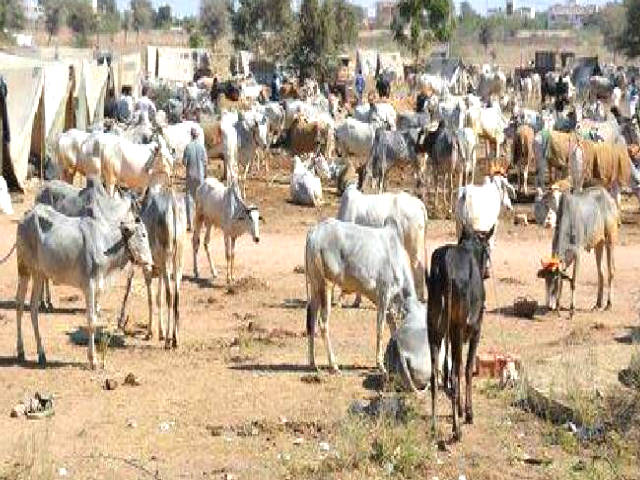
The first few days are defined by the “Great Arrival.” Thousands of Nagauri bulls, camels, and Marwari horses trek across the dunes to reach the fairgrounds.
-
The Visual:
-
The Activity: This is the prime time for “The Deal.” Traders engage in a theatrical style of bargaining—often using secret hand signals under a cloth—to settle the prices of India’s finest livestock.
Days 4-6: The Spirit of Competition
Once the bulk of the trading is secured, the energy shifts to rural athletics.
-
The Mirchi Bazaar: Trading in the “Red Chili Market” hits its peak. The mounds of chilies are at their highest, creating a crimson landscape that is a focal point for photographers.
-
Desert Sports: The mid-week is marked by high-octane Camel Races, horse dancing, and the famous Tug-of-War matches where locals challenge travelers.
Days 7-8: The Cultural Crescendo
The final days are dedicated to the arts and folk heritage of Rajasthan.
-
The Nightly Fire: As the sun dips, the fairgrounds glow with campfires. Folk musicians (Manganiyars and Langas) perform ancient ballads of bravery and love.
-
The Craft Fair: The marketplace for leatherwork, iron tools, and traditional jewelry reaches its busiest, as pilgrims buy souvenirs before the long journey home.
III. Significance: Why the Timing Matters
The January/February window is strategically chosen for both the animals and the people.
-
Climate Advantage: The mild winter sun ensures the livestock can travel long distances without dehydration.
-
Agrarian Cycle: The fair falls during a lull in the farming calendar, allowing the rural community to gather, socialize, and reinvest their earnings into new cattle for the upcoming spring season.
IV. Interactive Traveler’s Checklist
If you are planning to witness this spectacle, here is your “Essential Pulse” guide:
-
The 6:00 AM Rule: Be at the fairgrounds before sunrise. The combination of cooking-fire smoke and desert mist creates a “National Geographic” atmosphere.
-
The Mirchi Challenge: Visit the Chili Market, but stay upwind! The spice in the air is legendary.
-
The Cultural Evening: Don’t miss the puppet shows (Kathputli)—they aren’t just for kids; they tell the deep history of Rajput kings.
V. Professional Snapshot (Evergreen Reference)
| Metric | Detail |
| Primary Month | Magh (January/February) |
| Duration | 8 Days |
| Core Deity | Saint Ramdeoji |
| Key Ritual | The Deep Daan (Lighting of lamps) |
| Strategic Keywords | Nagaur Fair Dates, Ramdeoji Pashu Mela celebration, Rajasthan Winter Festivals. |