
Games and Sporting Events on Onam
During the Festival of Onam Kerala becomes a hub of activities and festivities, several sporting and gaming events are organized […]
During the Festival of Onam Kerala becomes a hub of activities and festivities, several sporting and gaming events are organized to add to the fun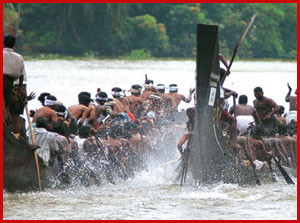
To elevate the quality of this content for a professional or cultural publication, the focus shifts from a simple list to a narrative that explains the social fabric of Kerala. Traditional Onam games, known collectively as Onakalikal, are a blend of athletic prowess, rural folklore, and community bonding.
Here is the refined, human-centric guide to the traditional games of Onam.
The Spirit of Onakalikal: Strength, Grace, and Community
Onam is a celebration that spills out of the kitchen and into the courtyards and village squares. After the grand morning feast, the afternoon is dedicated to Onakalikal. These games were historically designed to keep the agrarian community physically fit and mentally sharp during the harvest break.
The Trials of Physical Strength
In rural Kerala, village pride is often staked on these high-energy contests. They are raw, loud, and require immense stamina.
-
Vadamvali (The Great Tug of War): This is the undisputed centerpiece of Onam sports. Unlike a casual schoolyard game, Vadamvali in Kerala is a serious athletic event. Teams from neighboring villages train for weeks. The sound of the crowd chanting rhythmic cheers as two lines of men or women strain against a thick jute rope is the quintessential sound of a Kerala afternoon.
-
Onathallu (The Martial Duel): Dating back to the era of the warriors of Kerala, Onathallu is a form of ritualistic wrestling. It is a controlled combat sport where participants use flat-handed strikes and blocks. It is a test of agility and pain tolerance, performed in a spirit of sportsmanship to honor the martial traditions of the state.
-
Ameyeythu (Traditional Archery): This is one of the oldest games associated with the festival. Using bows carved from bamboo and arrows made of reeds, players aim at a target called the “Cheppu.” It requires a steady hand and a calm mind, reflecting the focus required by the hunters of ancient Kerala.
The Art of Performance and Pageantry
Some games are less about winning and more about the collective visual experience. these performances often blur the line between sport and theater.
-
Pulikali (The Play of the Tigers): Perhaps the most photographed event of the season, Pulikali sees hundreds of men transformed into tigers through elaborate body painting. The “game” lies in the dancers’ ability to mimic the pounce and retreat of a predator to the heavy, frantic beat of the drums. The largest gathering takes place in Thrissur, where “tigers” from different wards compete for the title of the best troupe.
-
Kummattikali (The Masked Procession): Common in the Palakkad and Thrissur districts, dancers wear heavy wooden masks representing various deities and legendary characters. They wear skirts made of Kummatti Pullu (a specific type of grass) and move from house to house, bringing blessings and humor to every doorstep.
The Rhythms of the Courtyard
While the fields are alive with physical contests, the courtyards of homes are filled with games that celebrate rhythm, song, and strategy.
-
Talappanthukali (The Ball Game): This is a complex game played with a ball made of leather or dried plantain leaves. It involves multiple stages of difficulty—throwing the ball under the leg, over the shoulder, and behind the back—to hit a wooden stick. It is a game of high coordination and is often played by men and boys of all ages.
-
Kaikottikali and Thumbi Thullal: These are the traditional dances of the women. Kaikottikali is a graceful circle dance involving synchronized clapping and footwork. Thumbi Thullal is more intense; women sit in a circle around a lead singer and sing increasingly fast songs. The goal is to reach a state of rhythmic euphoria, mimicking the fluttering of a dragonfly (Thumbi).
Why the Games Matter Today
Beyond the entertainment, these games serve a vital human purpose. They are the “Great Equalizer.” During Onam games, the farmer, the shopkeeper, and the professional stand on the same ground. Whether it is the shared grit of a tug-of-war rope or the shared laughter at a Pulikali dancer’s antics, these traditions reinforce the idea that for ten days, the entire community is one family.
Comparison of Game Types
| Category | Primary Focus | Best Experienced In |
| Athletic | Strength & Stamina | Rural Village Squares |
| Rhythmic | Coordination & Song | Home Courtyards |
| Spectacle | Art & Performance | Thrissur City Center |
A historical deep-dive into Pulikali (The Play of the Tigers) is highly relevant, as it is often considered the most iconic visual representation of Onam’s competitive spirit. While it appears as a chaotic and colorful street dance, its roots are a fascinating blend of military history, religious tradition, and local artistry.
The Origins of Pulikali: From Royal Pastime to Folk Icon
The history of Pulikali is a testament to the cultural melting pot of 18th-century Kerala. While the exact date of its inception is debated, two primary historical narratives explain how men began painting themselves as tigers to celebrate the harvest.
1. The Influence of the Mysore Sultanate
The most widely accepted historical origin traces back to the late 18th century, specifically to the reign of Rama Varma Sakthan Thampuran, the Maharaja of Cochin. During this period, soldiers from the Mysore army (under Hyder Ali and later Tipu Sultan) were stationed in the Thrissur region.
These soldiers brought with them a high-energy folk art called Puli-Attam. To celebrate the spirit of bravery and the end of the harvest, they would paint themselves with stripes and mimic the movements of a tiger. Sakthan Thampuran, a visionary ruler known for modernizing Thrissur, was so enamored by the performance that he integrated it into the local Onam festivities. He encouraged the local youth to compete in the art, turning a military pastime into a community tradition.
2. The Symbolic Hunter and the Prey
Pulikali is not just a dance; it is a theatrical representation of a hunt. Historically, it symbolized the relationship between the wild (represented by the tiger) and the civilization (represented by the hunter or Ayudham).
In earlier versions of the dance, the “Tigers” would be “hunted” by a performer playing a hunter with a toy rifle or a bow. This was meant to represent the human triumph over the dangers of the wilderness, ensuring the safety of the harvest. Over time, the hunter became a secondary character, and the focus shifted to the “shaking” of the bellies and the intricate body art of the tigers themselves.
The Evolution of the Craft
The Pulikali we see today in the streets of Thrissur is vastly different from its 200-year-old predecessor. The evolution of the art form can be seen in three distinct areas:
The Canvas: From Natural Dyes to Oil Paints
In the beginning, performers used natural pigments—charcoal for black, turmeric for yellow, and red clay for stripes. These were easily washed off but lacked the vibrancy seen today. Modern Pulikali artists use high-gloss enamel paints and zinc powder. The process is grueling; a single performer must stand still for 5 to 7 hours as multiple layers of paint are applied to their body.
The Physicality: The “Belly Dance”
A unique evolution of Pulikali is the preference for “heavy” performers. While a tiger in the wild is lean, a Pulikali tiger is often a man with a large, protruding belly. This is because a larger “canvas” allows the artist to paint a more detailed tiger face. When the performer shakes his waist to the beat of the drums, the tiger’s face appears to growl or move, creating a mesmerizing and humorous effect.
The Percussion: The Pulse of the Hunt
The music of Pulikali is provided by the Thakil, Udukku, and Karatal (cymbals). The rhythm, known as Pulippaatu, is distinct from other Kerala percussion. It starts slowly as the tiger “stalks” its prey and increases to a frantic pace during the “combat” or chase sequences.
Pulikali in Modern Kerala
Today, the Thrissur Swaraj Round serves as the ultimate arena for this art. Thousands of people gather on the fourth day of Onam (Nalaam Onam) to witness various “Desams” (village groups) compete. Each group brings a float and a troop of tigers, often numbering in the hundreds.
The significance of Pulikali today lies in its inclusivity. It is a secular art form where people of all religions and backgrounds participate in the painting, the drumming, and the dancing. It remains a living bridge to Kerala’s royal military past and its enduring love for folk theater.
ओणम पर खेली जाने वाली गेम्स की हिंदी में जानकारी पढ़ने के लिए यहां, क्लिक करें