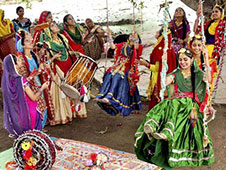
A Cultural and Spiritual Odyssey

The Teej Fair (Teej Mela) is one of India’s most visually spectacular festivals, primarily celebrated in Jaipur, Rajasthan. While many fairs focus solely on commerce, the Teej Fair is a sacred civic event that marks the arrival of the monsoon rains and the divine reunion of Goddess Parvati (Teej Mata) and Lord Shiva.

The Royal Procession: A Living History

The centerpiece of the fair is the royal procession of the Goddess. This is one of the few occasions where the city's royal heritage and public devotion merge seamlessly.

  • The Path of the Goddess: The idol of Teej Mata emerges from the Tripolia Gate of the City Palace. The procession winds through the historic markets of the Pink City, including Tripolia Bazaar and Chhoti Chaupar.

  • The Entourage: The idol is carried on a golden palanquin (Takhat-e-Rawan). It is escorted by a majestic guard of honor featuring decorated elephants, antique horse-drawn carriages, and "shankhnaad" (conch shell) players.

  • Folk Artistry: The fairgrounds and the parade route become stages for the Ghoomar and Kalbeliya dancers, alongside Baharupiays (traditional impersonators) and stilt walkers.

Rituals and Symbolism: Understanding the "Hariyali"

The term Hariyali translates to "greenery," signifying the rebirth of the earth after the scorching summer heat.

Aspect Ritualistic Significance
Leheriya A traditional tie-dye technique resulting in wave-like patterns, worn by women to represent the flowing waters of the monsoon.
Sinjara Celebrated the day before the main fair, this is a day of gifting. Families send "Sinjara" (gifts of henna, sweets, and jewelry) to daughters and daughters-in-law.
Swings (Jhulas) Swings are hung from large Neem or Banyan trees. This tradition symbolizes the lighthearted spirit of the season and the joy of the Goddess's return.

Culinary Heritage of the Teej Mela

The fair is a gastronomic landmark for traditional Rajasthani sweets that are difficult to find in their authentic form during other seasons.

  1. Ghevar: A intricate, disc-shaped sweet made from flour and ghee, fried to a honeycomb consistency. It comes in varieties like Malai (cream-topped), Paneer, and Mawa.

  2. Sattu: A ritualistic dough made of roasted grains, pulses, and nuts. It is specifically prepared for the fast-breaking ceremony of Teej.

  3. Kachori and Mirchi Bada: These spicy savories provide a sharp contrast to the sweets, often enjoyed by fair-goers while navigating the crowded bazaar.

Knowledge Corner: Deepening the Narrative

  • The Legend of 108 Births: According to Vedic tradition, Goddess Parvati underwent 108 cycles of rebirth and penance to prove her devotion to Lord Shiva. The Teej Fair celebrates the 108th birth, where Shiva finally accepted her as his consort.

  • The Birbahutti: The fair coincides with the appearance of a small, bright red velvet insect called the Birbahutti. In local folklore, the appearance of this insect is a divine signal that the rains have officially blessed the land.

Interactive Guide for Visitors

Cultural Engagement: The Mehendi Tradition

Henna application is more than a beauty ritual during Teej; it is believed to bring good fortune.

  • Actionable Insight: Visit the stalls near Hawa Mahal where traditional artists specialize in "Teej-style" Mehendi. Look for the Chaupar (cross-square) and Leher (wave) patterns which are historically significant to the Jaipur region.

The Photography Challenge

For those documenting the fair, look for these three unique frames:

  1. The moment the sun hits the brass ornaments of the lead elephants.

  2. The "wave of green" created when a group of women in Leheriya sarees cross the pink-walled markets.

  3. The Maniharon ka Rasta, a lane dedicated to the creation of lac bangles, which pulses with extra energy during the fair.

Planning Your Visit

  • Optimal Timing: The procession typically begins in the late afternoon (around 16:30). Arriving early is essential to secure a vantage point on the elevated shop verandas.

  • Etiquette: While the fair is a public celebration, the procession of the Goddess is a religious event. It is respectful to remove footwear if you are invited into a viewing area near the idol.

This three-day itinerary is designed to immerse you in the heart of the Teej festivities in Jaipur. In 2026, Hariyali Teej falls on August 15, coinciding with India's Independence Day, which will make the city exceptionally vibrant.

Day 1: August 14, 2026 – The Eve of Teej (Sinjara)

The day before Teej, known as Sinjara, is dedicated to preparation and the celebration of daughters and daughters-in-law.

  • Morning: The Bazaars of the Pink City Visit Johari Bazaar and Bapu Bazaar. This is the best time to see the markets at their peak. You will find thousands of "Leheriya" sarees in every shade of green and stalls overflowing with fresh flowers and colorful bangles.

  • Afternoon: The Art of Mehendi Head to the area near Hawa Mahal. You will find traditional henna artists lining the pavements. It is a local tradition to have mehendi applied on this day.

  • Evening: Culinary Prelude Visit Rawat Misthan Bhandar (near Sindhi Camp) to try their seasonal Ghevar. Since it is Sinjara, the demand is high, and the sweets are at their freshest.

  • Night Stay Recommendation: * Luxury: Samode Haveli or Alsisar Haveli (to experience traditional Rajasthani courtyard celebrations).

    • Heritage/Boutique: Dera Mandawa or Arya Niwas.

Day 2: August 15, 2026 – The Grand Teej Procession

This is the main day of the festival. Note that because this is also Independence Day, the morning will feature civic parades, while the evening is reserved for the Goddess.

  • Morning: Spiritual Start Visit the Govind Dev Ji Temple within the City Palace complex. The temple is beautifully decorated, and you can witness the special "Jhulan" (swing) ceremony where the deities are placed on flower-decked swings.

  • Late Afternoon (4:00 PM onwards): The Royal Procession The idol of Teej Mata emerges from the City Palace (Tripolia Gate).

    • Vantage Point: Secure a spot on the rooftop of a shop in Tripolia Bazaar or the Isarlat Sargasooli (minaret) for an aerial view.

    • What to See: Look for the golden palanquin, followed by the "Nishankhu" (flag bearers), folk dancers performing Ghoomar, and the royal elephants.

  • Dinner: The Teej Feast Head to Laxmi Misthan Bhandar (LMB) in Johari Bazaar. They offer a special "Teej Thali" featuring Dal Baati Churma and their world-famous Paneer Ghevar.

Day 3: August 16, 2026 – Cultural Immersion & Nature

The day after the main procession is often when the festivities move toward the local parks and lakes.

  • Morning: Swings and Songs Visit Pondrik Park or Kanak Vrindavan Garden. You will see local women gathered on large swings tied to old trees, singing traditional Teej folk songs (Teej Geet). It is a peaceful, authentic way to see the community side of the festival.

  • Afternoon: Craft and Culture Explore the Anokhi Museum of Hand Printing near Amber Fort. Teej is a celebration of textiles, and learning about the hand-block printing process adds depth to your understanding of the "Leheriya" patterns you saw on Day 1.

  • Evening: Sunset at Nahargarh Drive up to Nahargarh Fort for a sunset view of the Pink City. During the monsoon, the Aravalli hills turn a brilliant green, perfectly embodying the spirit of "Hariyali" (greenery) Teej.

Essential Travel Tips for Teej 2026

  • Advance Booking: Because the festival coincides with a national holiday, hotels and trains will book up months in advance. Aim to book by early 2026.

  • Weather: It will be humid and rainy. Carry a compact umbrella and wear breathable cotton clothing.

  • Transportation: Many roads in the Walled City (Old Jaipur) are closed for the procession. Use e-rickshaws or walk to get closer to the parade route.

Forthcoming Festivals